
-
1300 994 890Property Management1300 832 373Consulting & Certification
There will be fatalities! It’s not if, but when!
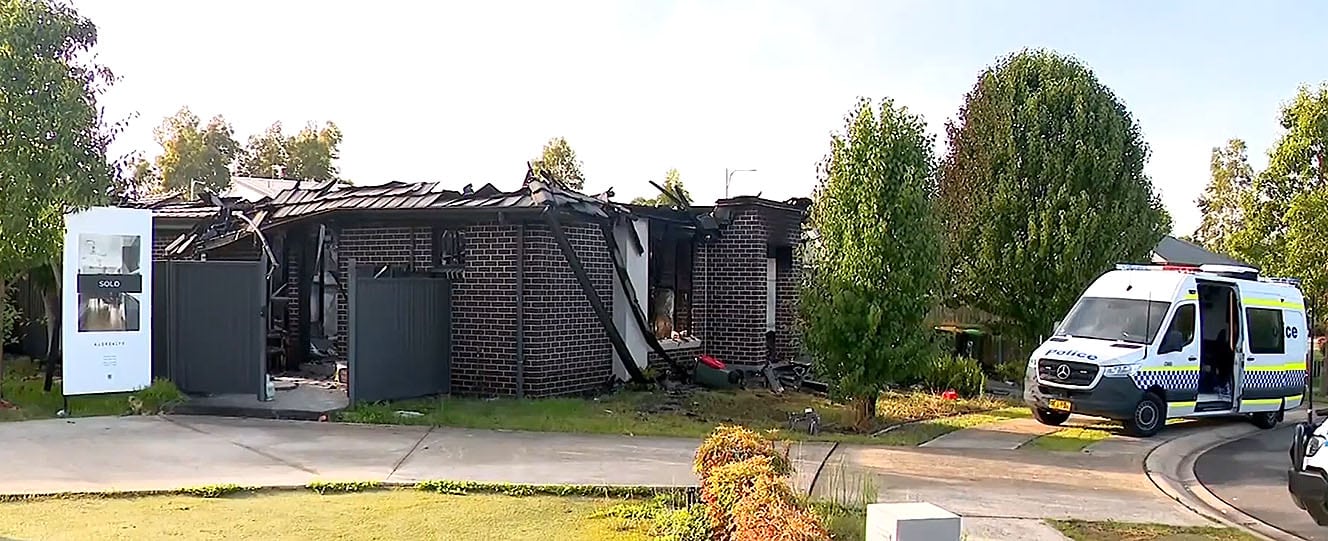
There will be fatalities! It’s not if, but when! was the subheading of a blog post I wrote on 26 October 2017, in which I raised my early concerns about the lack of fire sprinklers and the failure to apply a Class 3 classification under the Building Code of Australia for Specialist Disability Accommodation. View Blog Post.
We have now seen with the death of a gentleman named David in a fire at a disability support home in Spring Farm, Sydney, on Saturday, 3 January 2026, that my concerns were well-founded. Blog Post on Spring Farm Fire
David’s death represents a multi-level failure across local, state and federal bodies, including state and territory building commissions and building surveyors to enforce the prescriptive requirements within the Building Code of Australia when providing housing for people with disability. However, as I discuss below, the information and training for responsible parties to undertake their roles is currently insufficient
Failure to Apply the Correct Building Classification
In a blog post I wrote on 21 October 2023 titled “Why the SIL, STA, MTA or SDA Accommodation you’re Providing may be Operating Illegally” View Blog Post. I then followed up with another post titled “The Failures of SDA and Fire Safety” View Blog Post.
In these posts, I examined the occupant profiles of SDA in detail, the rate of burn for an unprotected house, and a review of building classifications nominated for SDA as detailed in the Pricing Arrangements for Specialist Disability Accommodation, along with providing recommendations to protect life.
My conclusion from these posts is that all supported accommodation for people with disability must include fire sprinklers, either AS 2118.4 – Automatic fire sprinkler systems – Residential or AS 2118.5 – Automatic fire sprinkler systems – Domestic, that are determined by the registered building surveyor (RBS) undertaking statutory functions and a fire engineer.
Building Surveyors
One of the key issues I see is the lack of education and guidance provided for building surveyors. When they receive a set of plans to assess, how are they expected to know if it will be housing people with disability, especially when indicators such as grabrails in toilets, etc, are not provided. A lot of their clients will not disclose that it is being used as disability accommodation, as they will want them assessed as class 1b rooming houses, as it is a far cheaper build than class 3. Experienced building surveyors with commercial experience may see some of the spatial giveaways in the design and ask questions, but in most cases, they will not be aware, especially if it is an Improved Liveability or Robust house that, design-wise, is similar to a standard residence.
State & Territory Building Commissions.
We are aware that several state and territory governments are reviewing the classifications of SDA. To date, we have not seen any clear directives that have been issued to building certifiers. There was a case in NSW, Orfali v Commissioner for Fair Trading, that outlined the need to apply Class 3, which I’ll discuss further in this post. However, there is limited awareness of this in other states and territories.
State & Territory Building Commissions are the regulators for the construction sector. Their primary role is to oversee the registration and licensing of practitioners, enforce safety standards, and conduct site audits to ensure compliance with the National Construction Code. The building commissions provide industry oversight and technical guidance through the State or Territory Building Surveyor. Beyond regulation, the Commissions holds significant enforcement powers, including the ability to issue rectification orders for defective work to ensure long-term building quality and accountability.
I would encourage each of these commissions to either individually or collectively be more active in providing building surveyors/certifiers, including municipal building surveyors, with education through practice notes and CPD sessions to increase consultant knowledge on the assessment and approvals for Specialist Disability Accommodation, so they have a clear directive on how SDA must be classified and assessed.
NDIA’s Responsibility
The NDIA is aware of these issues, and we have been involved in discussions with them and the Australian Building Codes Board (ABCB) regarding the application of building classifications, including an additional classification of 1c for supported accommodation, including SDAs.
Towards the end of 2024, I was invited by Fire Rescue Victoria and the National Disability Insurance Scheme (NDIS) Quality and Safeguards Commission to present at the Disability Fire Safety Forum that was focused on improving fire safety for people with disability.
My topic was “Fire safety in class 1, 2 and 3 buildings, Perspectives from a disability access consultant” My presentation can be Viewed Here, and it covered:
- Defining SDA Participants for BCA Classification
- Building classifications under the Building Code of Australia
- What is the role of the onsite overnight assistant (OOA)?
- SIL Housing risks
- What needs to change
I believe the NDIA need to take a more proactive role to address this issue by undertaking an internal review of key SDA and SIL documents in consultation with the ABCB and relevant state and territory commissions that includes:
- Revising the nominated building classifications within Table 4 of the Pricing Arrangements for Specialist Disability accommodation.
- Reference within the design standards that are currently under review, the performance requirements (not DtS) within the BCA for class 3 buildings to ensure designers understand their obligations, whilst proactively lobbying the Australian Building Codes Board (ABCB) to develop the class 1c classification.
- Develop a minimum expected standard for SIL housing, including the appropriate building classification that includes the provision of fire sprinklers. This should be done in consultation with the ABCB and include discussions about the suitability of class 1b rooming houses that include residential fire sprinklers, as these are easy and inexpensive to retrofit, as it will not be possible to convert existing SIL housing stock to Class 3 residential care buildings, and would render the majority of SIL housing uninhabitable, leaving residents vulnerable.
- Develop an Emergency and Disaster Management document in consultation with industry experts, including fire engineers and evacuation planning consultants, that outlines the performance criteria that must be met.
NDIS Practice Standards and Quality Indicators
The NDIS Practice Standards establish the mandatory benchmarks that all registered NDIS providers must meet to ensure the delivery of safe, high-quality, rights-based services, encompassing governance, risk, service delivery, worker competence, and participant safeguards. Each Standard includes specific Quality Indicators, which are the measurable, auditable criteria used by approved auditors to determine whether a provider is achieving the required participant outcomes in practice. Together, they form the core framework for registration, certification, and mid-term audits, as well as continuous improvement and national consistency across the sector. One of its key sections is Emergency and Disaster Management.
Emergency and Disaster Management
The Emergency and Disaster Management section requires providers to plan for and mitigate risks to participants’ health, safety, and well-being, ensuring that critical supports continue before, during, and after any emergency or disaster. This involves preparing for and responding to emergencies, adjusting and rapidly adapting supports, and clearly communicating any changes to workers, participants and their support networks. The governing body must develop, implement, and regularly review emergency and disaster management plans in consultation with participants. It must also actively test and refine these plans for different scenarios and ensure that they are clearly communicated. All workers must be trained to implement the plans effectively
In my discussions with Tania Gomez, from Tania Gomez Consulting, as a specialist consultant who assists SDA, SIL and Core Support providers to become registered and build strong quality systems she expects the following to have been undertaken when she carries out an assessment of businesses:
- Have developed and documented “emergency plans” (she teaches this as three levels:
- companywide business continuity plans,
- site-specific plans and
- participant-specific personal emergency evacuation plans (PEEPS),
- Plans to be made in consultation with stakeholders
- Workers are aware of and trained in the plans
- Undertake thorough testing of the plans regularly with workers and stakeholders where possible
- Schedule a review of plans on a regular basis
It should be recognised that the supporting documentation is vague, and there is no specific mention of SIL for providers to apply. This is a key area that requires improvement, as clarity of obligations is desperately needed.
Auditors of SIL Providers
I have had multiple discussions with SIL providers and the issues they have faced during audits, specifically the evacuation plans they had prepared, which often rely on staff turning into superhumans and evacuating all participants prior to emergency services arriving, is very concerning.
In my opinion, support staff should not be responsible for the life safety and evacuation of participants, as they are not trained emergency services personnel. The spread of smoke and flame is quick and unpredictable, as demonstrated here and covered in this post A Tragic Spring Farm Fire and the Imperative for Stronger Safety Frameworks in Disability Housing
Evacuation Plans and Policies should not be expected
to replace safe buildings with Fire Sprinklers
Expecting staff to manage the evacuation of residents in an emergency, particularly in the event of a fire, is not feasible. It will also be impossible to execute such plans, nor should these plans be expected to replace poor design in buildings that lack the required fire sprinkler system.
More guidance and education must be provided to both SIL providers and auditors so they can understand what is possible vs. what is expected based on unproven expectations.
Staff should be prepared and expected to evacuate themselves as quickly as possible in an emergency to protect their own life, ensuring they do not delay or place themselves at unnecessary risk. To support an efficient and informed emergency response, an emergency kit must be prepared and kept in a readily accessible location, allowing it to be retrieved immediately in the event of evacuation. This kit should contain essential information for first responders, including a current Personal Emergency Evacuation Plan (PEEP) for each participant, copies of their basic medical records, and a laminated floor plan of the dwelling clearly identifying the location of all bedrooms. In multi-storey or apartment settings, the kit must also include a schedule listing the apartment numbers and levels where each participant resides, enabling emergency personnel to quickly locate individuals and prioritise assistance where needed.
Civil and Administrative Tribunal New South Wales
Orfali v Commissioner for Fair Trading

We have seen the following decision by the Civil and Administrative Tribunal of New South Wales, which confirms my beliefs that building classifications for SDA should be class 3. Key extracts of the decision are following that clearly state they consider SDA must be class 3:
- Mr Orfali applied for review of the decisions of the Commissioner for Fair Trading (the Commissioner), made on internal review, to cancel his registrations as a registered certifier and to disqualify him from being registered for a period of ten years.
- I have found that the disciplinary grounds the Commissioner relied upon are established. Having regard to the seriousness of Mr Orfali’s conduct and other matters, I consider that the correct and preferable decisions are those made by the internal review officer. Accordingly, I have affirmed the Commissioner’s decisions.
The key grounds relating to accommodation for people with disability are as follows
- There were clear indications, in the application documents provided to Mr Orfali, that the purpose for which the buildings were designed was to accommodate residents with disabilities. Each of the CDCs was accompanied by SDA and NDIS design certificates and a plan of management referring to each resident’s special needs.
- Mr Orfali did not consider the purpose for which the buildings were designed to be significant in classifying the buildings under the BCA. He appeared to be reluctant to anticipate how the building would likely be used, stating in an affidavit: “There is no way of knowing, at the time of certification, what type of residents will be occupying a dwelling (unless explicitly stated in the Plan of Management). Nor is there any way of knowing what percentage of residents, if any, will suffer from a disability, or need physical assistance in their day-to-day activities (again, unless stated in the Plan of Management).”
- Such an approach is inconsistent with that required when classifying buildings under the BCA. For example, a certifier is required to determine whether the purpose of a building is to be “a place of residence where 10% or more of persons who reside there need physical assistance in conducting their daily activities” when deciding whether it is a residential care building (class 3). Further, the determination of purpose depends upon an assessment of all relevant documents. It is not simply a matter of adopting what is stated in the Plan of Management.
- Mr Orfali should have asked himself, when considering whether each proposed building was a class 1b building, whether it was “a boarding house, guest house, hostel or the like.” That is not something which featured in his reasoning, as set out in his affidavit evidence. A building containing self-contained units for persons with a disability is not a boarding house, guest house or hostel, and is sufficiently different from those forms of accommodation as not to be captured by the phrase, “or the like”.
- On the other hand, each of the proposed buildings was plainly “accommodation for people with disability” (within class 3) as well as “a residential care building” (within class 3). Each was a residential care building because it was plain that the purpose of the building was to house people who would need physical assistance in conducting their daily activities and to evacuate the building during an emergency, and that it was intended that at least 10% of the residents (in fact, a much greater proportion) would be such people.
- In these circumstances, each of the proposed buildings for which Mr Orfali issued a CDC was a class 3 building.
Fire safety standards
- The BCA contains more stringent fire safety requirements for class 3 buildings than the requirements applicable to class 1 buildings. Under Part E1 of the BCA, a sprinkler system must be installed in some class 3 buildings and must be installed throughout all class 3 buildings used as a residential care building. Under Part E2, class 3 buildings must be provided with an automatic smoke detection and alarm system complying with certain specifications.
- Mr Orfali did not identify that these minimum fire safety measures were required in the proposed fire safety schedule attached to each CDC and to each modified CDC (except in the case of the Thornton Development). In the case of the Thornton Development, Mr Orfali identified the requirement for an automatic smoke detection and an alarm system with a building occupant warning system.
- No provision for these required fire safety measures appeared in any of the CDC stamped plans (including the plans for the Thornton Development).
This is one example that demonstrates neither the building code or regulators recognise SDA or SIL accommodation. Instead, they reference the Deemed to Satisfy requirements of the Building Code of Australia to determine whether the purpose of a building is to be “a place of residence where 10% or more of persons who reside there need physical assistance in conducting their daily activities or to evacuate in an emergency. The very purpose of SDA and SIL housing is to support participants, so these requirements cannot be ignored, and in turn means all accommodation must be Class 3 Residential Care.
Download the decision in full:
Orfali v Commissioner for Fair Trading – NSW Caselaw
Local Governments Responsibility
Essential safety measures and liability
Councils have the responsibility for enforcing building safety within their municipality.
- The municipal building surveyor or chief officer of the relevant fire authority is responsible for enforcing the maintenance provisions of the Regulations.
- Building occupants have an obligation to ensure that all exits and paths of travel to exits are kept readily accessible, functional, and clear of obstructions.
- Building owners must ensure that an essential safety measure is maintained so that it operates satisfactorily.
Councils are also responsible for ensuring buildings within their municipality are used appropriately based on their approved building classification.
SIL Housing
Of particular concern to me is the provision of Supported Independent Living (SIL) houses, which offer accommodation and paid support to NDIS participants who receive SIL funding but do not qualify for Specialist Disability Accommodation (SDA). Funding commonly covers both the dwelling and staffing, often organised on a 1:3 model where each participant’s package contributes to one of three 8‑hour support shifts. There are thousands of these dwellings across Australia. Short‑Term Accommodation (STA) and Medium‑Term Accommodation (MTA) are often delivered in similarly configured buildings. The NDIA does not currently mandate specific life‑safety provisions for SIL houses.
Many SIL homes are standard Class 1a houses purchased or rented by providers and repurposed to deliver 24/7 support, a use that can conflict with the Building Code of Australia. These dwellings frequently have only minimal accessibility modifications, external doors and escape routes that are not safe for wheelchair users, and life‑safety requirements limited to smoke alarms (often not interconnected in older homes). There is typically no requirement for sprinklers, extinguishers or other active fire protection, and emergency services or local authorities may be unaware these houses are being used to house people with very high support needs. These factors make SIL housing a significant safety concern.
I raised these concerns during my presentations at state-based SIL Summits in Melbourne, Sydney, Brisbane, Adelaide and Perth during 2024 and 2025 organised by Tania Gomez Consulting. Tania provides several resources for SIL Providers. View Resources.
Change of Use
When a building is going to be used for a purpose not covered by its initial occupancy permit, a ‘Change of Use’ application must be made to a building surveyor/certifier. Depending on the type of change, this may have town planning/DA implications. For example, changing a class 6 shop to a class 5 office is seen as a change of use. Changing a class 6 clothing shop to a class 6 cafe is also a change of use, even though the building classification remains the same.
The same requirements apply to housing. For example, a Class 1a house is typically provided for an individual and family use. It cannot be used to accommodate multiple unrelated persons, such as a class 1b rooming. It is prohibited to use a class 1a house as a class 1b rooming house, as the design of a 1b includes additional elements such as wheelchair accessibility and evacuation lighting in addition to interconnected smoke alarms. This change triggers the need for a change of use approval to change the house from 1a to 1b or in the case of a residential care building, class 3. The current issue with SIL housing is that most are located within Class 1a dwellings, and as previously discussed, it is not possible to close these down, as there are no other options for people to live in.
Responsibility
Back in 2011, with the introduction of the Disability Access to Premises Standard, local governments began cracking down on illegally used buildings, particularly rooming houses that were used for student accommodation. They compared student accommodation websites with their own records to identify buildings that were being used illegally and served building notices accordingly.
With SIL housing, this would be more difficult. Perhaps a shared register between the NDIA and local government authorities should be established to enable local governments to identify buildings being used for NDIS services and take enforcement action.
However, if this were to happen and thousands of incorrectly classified SDA and SIL houses would be closed. Where would the participants go? This would mean we are faced with a dichotomy between participant safety and participant housing and homelessness, with added strain placed on hospitals.
Retrofitting Fire Sprinklers
We are aware that the Australia Building Codes Board has been in discussions with the State and Territories governments to introduce a new Class 1c building classification based on Class 1b with the addition of fire sprinklers. We understand they may also include additional smoke protection measures; however, they have been unable to confirm this.
Personally, I believe a Class 1b building that already includes interconnected smoke alarms and emergency lighting, as well as fire sprinklers, would be the perfect solution for SDAs due to their low occupancy numbers. Class 3 residential care buildings are typically larger-scale facilities providing supported accommodation. The following are examples of non-SDA residential care buildings:
- Assisted Aged Care Facilities (Non-Class 9c): Accommodation for the elderly that provides care but does not meet the full 24-hour medical staffing requirements of a Class 9c aged care building.
- Children’s Residential Care: Facilities designed for children who require specific physical assistance or special care.
- Large Boarding Houses with Care Services: Hostels or boarding houses that exceed 300m² or 12 residents and include care-type services for vulnerable occupants.
- Converted Domestic Dwellings: Standard houses (formerly Class 1a) that have been modified to house multiple unrelated residents (e.g., six residents and a live-in carer) requiring high-level evacuation assistance.
It is reasonable to accept that SDA does not compare to the above types of accommodation based on the low occupancy numbers, as the maximum number of participants within SDA is 5. I would argue that for up to three participants, a Class 1c with residential fire sprinklers is sufficient; however, for SDA with four or five participants, which is classified as a group home, a Class 3 residential care classification should be applied.
This would enable a cost-efficient retrofitting of residential fire sprinklers in SDA and SIL housing that is currently unprotected, dramatically improving participant safety.
Cost to Install Residential Fire Sprinklers
Two properties we took over management for in late 2025 were retrofitted at a cost of $24,000/each, including static storage tanks. This, for any provider, could be easily written off over a handful of years.
Home Fire Sprinkler Coalition Australia
The Home Fire Sprinkler Coalition Australia (HFSCA) was established to inform the public and industry stakeholders about the life-saving value of home fire sprinkler protection. HFSCA has was formed by AFAC (the National Council for Fire and Emergency services) and FPA Australia (Fire Protection Association Australia) to provide the leading national resource for independent, non-commercial information about home fire sprinklers. Their website includes excellent resources for the type of sprinkler system I am suggesting.
Visit the Home Fire Sprinkler Coalition Australia website
Need to learn more?
Understanding an organisation’s Liability and Risk, providing Fire Safe SDA & SIL
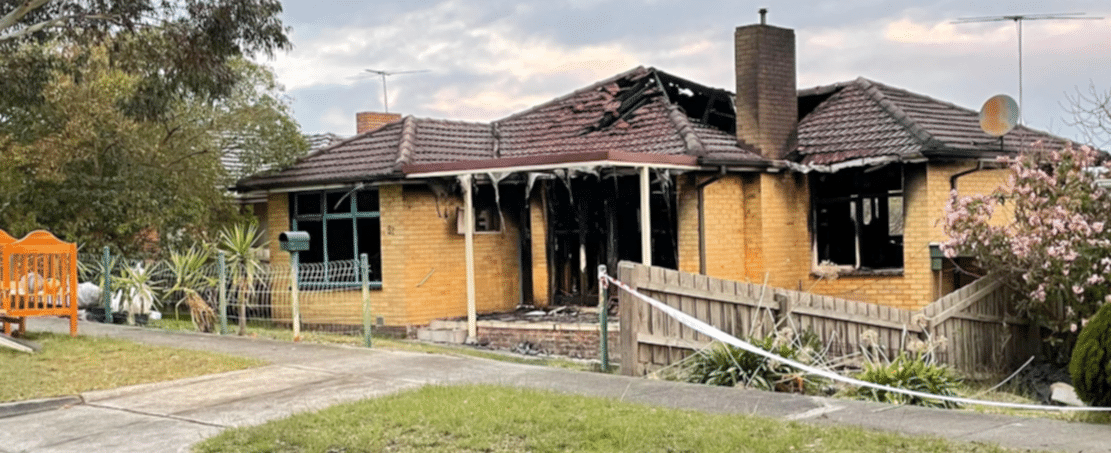
Seminars for SDA Organisations and Individuals
In this seminar, you will gain an understanding of the complexities in providing fire-safe Specialist Disability Accommodation. It will discuss an organisation’s liabilities and offer solutions to improve survivability in an emergency.
View Seminar Details

Bruce has over 32 years of experience in disability access, architectural design, documentation & project management
He formed Equal Access Pty Ltd in 2006 in response to growing recognition, that whilst businesses were being urged to respond to their obligations under the Disability Discrimination Act, the majority of assistance available was focused almost entirely upon the needs of the individual with a disability without an understanding of the impacts and practicalities for building owners, managers and consultants.
Bruce also specialises in evacuation procedures and policy for people with a disability and is a member of the Standards Australia development committee FP-017 Emergency Management Planning – Facilities (AS3745)
Categories
Recent Posts
- There will be fatalities! It’s not if, but when!
- Creating Accessible and Inclusive Housing: Universal Design in SDA
- Understanding Luminance Contrast and Colour Contrast for SDA
- Disability Fire Safety Forum: Specialist Disability Accommodation
- Converting an Existing House to Specialist Disability Accommodation