
-
1300 994 890Property Management1300 832 373Consulting & Certification
How to Design, Develop and Build Specialist Disability Accommodation

Specialist Disability Accommodation (SDA) forms a critical part of Australia’s National Disability Insurance Scheme (NDIS), designed to deliver high-quality, purpose-built housing for people living with extreme functional impairment or very high support needs. The impact of SDA reaches beyond bricks and mortar; it is about enabling choice, inclusion, safety, and independence for some of Australia’s most vulnerable community members. As the sector evolves, driven by new standards, regulatory reviews, and sustained policy and financial commitment from government and investors, Australia stands at the forefront of innovative, participant-centred housing for people with disability.
 Delivering desirable SDA, however, demands sector-leading expertise and a constant commitment to best practices throughout every stage of development, from land selection and planning through design and construction to the integration of features that foster comfort, control, and dignity. The following guide provides a comprehensive analysis of how to develop quality SDA, drawing on our extensive experience as assessors and as a registered SDA Provider, as well as legislative frameworks, industry benchmarks, and emerging trends. The focus is placed on strategic land selection and community inclusion, uncompromising build quality and durability, spatial planning that exceeds minimum requirements, and value-adding design elements such as assistive technology, acoustic controls, and outdoor amenities.
By aligning with the highest expectations set by the NDIS, experienced consultants, and the lived experiences of people with disability, SDA Consulting Australia delivers insights and recommendations grounded in extensive knowledge of the sector. Our approach aligns with the principles outlined in national guidelines, including the current SDA Design Standard, Universal Design best practices, and regulatory advancements.
The Regulatory Framework for SDA: Setting the Foundation
Understanding SDA and the NDIS Context
SDA is a housing support provided under the NDIS for people with significant, permanent disabilities. Its core intent is to promote independence, safety, and quality of life by supplying homes purpose-built or modified to account for severe functional limitations and high support needs. The NDIS funds both the capital component (the dwelling itself) and allows for separation from support service provision, promoting participant choice with the intent of preventing conflicts of interest.
To qualify for NDIS SDA funding, participants must be assessed as having either an “extreme functional impairment and/or very high support needs” and have SDA included in their individual NDIS plan. The NDIS (Specialist Disability Accommodation) Rules 2020, in conjunction with the NDIS Act 2013, along with related guidelines and the NDIS Quality and Safeguards Framework, outline eligibility criteria, design requirements, funding arrangements, and provider obligations.
SDA Design Categories and Building Typologies
Central to the quality and compliance of SDA builds is the NDIS Specialist Disability Accommodation Design Standard. Published in 2019 and effective for all new builds since July 2021, this Standard outlines minimum design and performance requirements for registered SDA dwellings. Four distinct SDA design categories respond to the varied needs of participants:
- Improved Liveability: for people with sensory, intellectual, or cognitive impairment, focusing on wayfinding, luminance contrast, and adaptable features.
- Fully Accessible: provides step-free movement and comprehensive physical accessibility, especially for wheelchair users.
- High Physical Support: similar to Fully Accessible, it incorporates advanced access features, structural support for hoists, backup power, and enhanced automation.
- Robust: for individuals with complex behaviours or those requiring reinforced, high-durability spaces.
Table: Overview of SDA Categories and Key Features
| Category | Primary Need / Focus | Key Features |
| Improved Liveability | Sensory/cognitive support | Wayfinding, visual contrasts, and enhanced accessibility for ambulant disability
|
| Fully Accessible | Physical disability | Step-free environment, wide openings, accessible amenities
|
| High Physical Support | High dependency support | Ceiling hoists, automation-ready, emergency power, advanced tech
|
| Robust | Complex behaviours | High-impact materials, reinforced fixtures, soundproofing |
Each SDA dwelling must also be categorised by an NDIS-designated building type (e.g., apartment, villa, townhouse, house, or group home), which influences the density and design approach.
The National Construction Code (NCC), the Commonwealth Disability Discrimination Act 1992, planning scheme controls, and local council requirements all intersect with the SDA framework, ensuring that accommodation is not only disability-accessible but meets overall building compliance, safety, and sustainability requirements.
SDA Compliance and Certification

All new SDA dwellings must be certified by accredited, third-party SDA Assessors, with both design-stage and as-built certification required before NDIA approval and enrolment. Ongoing compliance is ensured through regular inspections, maintenance protocols, and periodic reviews of safety-critical systems, particularly fire suppression and assistive technology, by the designated SDA Provider, who is the Property Manager.
Through these layers of regulation, SDA development is anchored on rigorous accountability, prioritising not only the immediate needs of participants but also long-term safety, adaptability, and liveability.
Strategic Land Selection and Location Considerations
Importance of Location: Beyond Accessibility
Strategic land selection is foundational to successful SDA development. The location of SDA homes directly impacts demand, the quality of life for residents, and the long-term viability of the investment. Participants are increasingly making empowered housing choices, prioritising not just accessibility but meaningful connection to community, supports, and everyday amenities.
Table: Critical Site Selection Criteria
| Factor | Rationale and Sector Guidance |
| Proximity to Amenities | Access to health, therapy, retail, recreation, and cultural facilities supports independence and overall quality of life.
|
| Transport Connectivity | Easy access to public and community transport maximises autonomy, enables participation in community activities, and provides flexibility for both residents and support staff.
|
| Healthcare & Support | Proximity to hospitals, GPs, allied health, and community care increases safety and reduces response times in emergencies.
|
| Safety and Environmental | Sites must avoid flood and bushfire risk, feature step-free access, and provide security for vulnerable residents.
|
| Community Inclusion | Located within established neighbourhoods fosters choice, inclusion, and social integration, supporting NDIS principles.
|
| Affordability & Demand | Balancing property costs with demand hotspots supports sustainable investment and maximises occupancy.
|
| Zoning & Planning | Meeting zoning requirements, density controls, and planning overlays ensures compliance and unlocks faster approvals. |
Best practice involves extensive demand analysis, from broad regional trends to hyper-local data, including population growth, SDA eligibility rates, and current supply gaps. Advisory and consulting teams leverage sources such as NDIS data and specialist demand analysis companies, in addition to participant feedback and forward-looking pipeline dwelling statistics, to inform their recommendations. This is covered in the blog post “How much money will I earn investing in SDA Specialist Disability Accommodation?”
Navigating Planning Controls and Local Regulations
Developers must review and comply with local government planning regulations and relevant zoning, which may include restrictions on density, building heights, parking, setbacks, and specific housing use classes. Infill and brownfield sites in metropolitan areas may unlock strong demand but require more complex planning engagement and community consultation.
An emerging trend is the heightened emphasis of councils on sustainable and socially integrated housing solutions, which translates into requirements for environmental assessment, stormwater management, and the demonstration of accessible environments not only within lot boundaries but also within the broader streetscape.
The land must be large enough to deliver generous rooms and amenities, exceeding minimum compliance requirements, while considering the unique needs of each SDA design category (refer to the specific dimensional guidance in subsequent sections and in sector guides, such as SDA Consulting’s block size guidelines).
Community Inclusion and Social Value
Location also plays a decisive role in fostering community inclusion for people with disability, a principle embedded in both NDIS philosophy and Universal Design. Developments should be sited to enable easy access to mainstream community activities, cultural events, places of worship, and social infrastructure. Being situated in vibrant, mixed-use neighbourhoods reduces the isolation historically associated with institutional care models and supports participants’ right to choose how and where they live.
Build Quality: Superior Materials and Construction Standards
From Compliance to Best Practice
Building quality SDA goes beyond ‘ticking boxes’ for compliance. While the NDIS Design Standard defines essential minimums, SDA Consulting advocates well above for a sector-leading approach that employs materials, construction methods, and quality assurance systems to deliver long-term durability, low maintenance, high safety, and participant satisfaction.
Key Construction Elements
Materials Selection: All fixtures and finishes must resist frequent, high-intensity use and withstand the unique wear and tear associated with assistive technology, mobility devices, and, for some, complex behaviours. Hardwearing but non-institutional materials, such as hard-wearing hybrid timber flooring or vinyl sheet, stone benchtops, and impact-resistant wall linings (e.g., Villaboard, masonry, or high-strength plasterboard), enhance both livability and longevity.
Slip Resistance and Transitions: Floor finishes in all rooms, especially wet areas, must meet or exceed slip resistance ratings (e.g., P3 or R10), with level, step-free transitions throughout.
Fixing and Reinforcement: Wet rooms require wall reinforcement for the installation of grab rails and bathroom fittings that are participant-specific, to ensure safety and adaptability over time.
Acoustic Control: Acoustic treatments, especially in Robust and Improved Liveability dwellings, should be achieved through high-mass walls, sound-absorbing finishes, and careful design of doors and windows to minimise both internal and external noise disturbances.
Sustainable Materials: Preference should be given to low-VOC paints, materials with renewable or recycled content, and fittings designed for ease of cleaning and infection control. Fixtures such as taps and appliances must be WELS or Green Star rated.
Construction Standards and Quality Assurance
SDA construction must adhere to the National Construction Code (NCC) with reference to disability access provisions (AS 1428.1, AS 1428.4.1 for tactile indicators, AS/NZS 2890.6 for accessible parking), fire safety regulations, and all relevant state and territory variations.
Best practices include comprehensive site supervision, independent inspections at critical stages, and detailed procedures for managing defects. Engaging builders with extensive SDA experience, along with allied professionals, is vital to ensure that processes are tailored to both the unique SDA requirements and the expectations of the NDIS enrolment and certification regime.
Fire Safety and Risk Management
 As SDA residents almost always have reduced capacity to evacuate unaided, fire safety is a non-negotiable priority. The installation of AS 2118.4 compliant residential fire sprinkler systems has shifted from being a best practice to being mandatory in new BCA Class 3 SDA dwellings across most Australian jurisdictions, providing essential life protection and minimising property loss. Key elements may include:
- Comprehensive smoke detection in all bedrooms, living spaces, and common areas;
- Fire-rated separation of apartments and bedrooms, including self-closing fire doors, where required;
- Accessible and visible evacuation routes, clear of obstructions, and with turning circles and thresholds accommodating beds, wheelchairs, and emergency personnel;
- Emergency power systems for lighting and essential assistive technology, ensuring continued safety in power outage situations.
Regular maintenance and inspection of these systems, with clear evacuation plans adaptable to participant needs, is essential for compliance and lifelong safety assurance.
For already constructed BCA Class 1b SDA dwellings, SDA strongly recommends the installation of AS 2118.5 compliant residential fire sprinkler systems as detailed by the Home Fire Sprinkler Coalition Australia (HFSCA).
Fire Safety and Regulatory Compliance
 Specialist Disability Accommodation (SDA) must be planned and built with fire safety as a core, not an add-on. The Building Code of Australia (BCA) classifies an SDA dwelling as a Class 3 residential care building rather than a standard Class 1b dwelling when multiple unrelated participants or onsite overnight assistance is included. This classification brings more stringent fire-resistance, egress, and access requirements. Getting the classification wrong at the design stage can have severe regulatory and safety consequences, including orders to stop work, expensive retrospective upgrades, non-enrolment for SDA funding, or even demolition.
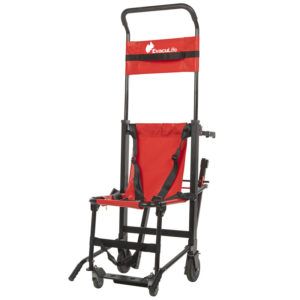
Practical fire-safety failures in SDA commonly stem from underestimating evacuation difficulty, inadequate emergency planning, and reliance on standard domestic construction that lacks active suppression and compliant compartmentation where required. In apartments where many participants are housed above ground level, the risk multiplies, and standard passive measures alone are insufficient. As a result, stakeholders (designers, providers, certifiers, and funders) are being urged to adopt layered protection, including proper emergency management and evacuation planning tailored to residents’ needs, as well as effective compartmentation and detection systems. Additionally, assistive technology such as evacuation chairs, evacuation sleds, and smoke masks must be included.
Regulatory compliance requires early engagement with a building certifier, making explicit risk-based design decisions, and maintaining transparent documentation that ties the building classification, occupant profile, and chosen fire protection measures together. Best practice now favours treating SDA as a specialist risk environment, involving the use of clear evacuation procedures, including the development of Personal Emergency Evacuation Plans (PEEPs) and training, disability-aware alarm/notification strategies, and designing to the higher fire-safety expectations. These steps both reduce real harm to participants and protect owners and providers from the legal and financial consequences of non-compliance, demonstrating that all reasonable efforts were made to protect occupants in the event of an emergency.
Fire Engineered Design of SDA
Appointing a fire engineer who has experience in Specialist Disability Accommodation (SDA) offers significant benefits, particularly in striking a balance between safety and cost-effective construction. Performance solutions can be applied to meet the stringent fire safety requirements of Class 3 residential care buildings, which SDA dwellings often fall under. These solutions enable strategic modifications such as installing occupant warning systems with sounders in lieu of full emergency warning and intercommunication systems (EWIS), omitting exit signage, or reducing the fire resistance levels of walls near boundaries without compromising the safety of residents. Such measures are carefully assessed and justified through fire engineering reports and compliance documentation, ensuring they meet the expectations of building surveyors/certifiers and fire authorities.
By developing performance solutions, experienced fire engineers can reduce construction costs while maintaining compliance with fire safety standards. As an example, the use of compliant sprinkler systems may justify the removal of internal fire compartmentation, provided that smoke separation is addressed appropriately. Fire engineers also manage the preparation of essential documentation, including fire engineering briefs, reports, and compliance certificates, which are necessary for regulatory approval. Their involvement ensures that SDA developments are not only safe and compliant but also tailored to the unique needs of residents and the practical realities of construction.
Generous Room Sizes and Refined Spatial Planning
SDA Minimums And Why Exceeding Them Matters
The SDA Design Standard details specific requirements for room sizes, circulation spaces, and access provisions that vary by design category. However, meeting these minimums risks delivering outcomes that may be compliant but are neither comfortable, supportive, nor desirable for genuine independence.
Improved Liveability: Bedrooms must be at least 3,100mm x 3,100mm, with corridors a minimum of 1,000mm wide. Kitchens, living areas, and bathrooms must be accessible, but do not require step-free designs beyond the entry level. All doorways must provide a clear opening of at least 820mm (typically a standard door size of 920mm is used).
Fully Accessible and High Physical Support: Bedrooms must accommodate a minimum queen-sized bed, with minimum circulation spaces (e.g., a minimum of 1540mm beside the bed and 1000mm on the other two sides). All corridors must be at least 1200mm wide between skirtings, with every door providing a minimum clear opening (900mm for Fully Accessible, 950mm for High Physical Support). Bathrooms must provide comprehensive, accessible layouts that comply with AS1428.1 (excluding grabrails, backrests and shower seats), and kitchens must be furnished to ensure full usability in both seated and standing positions.
Robust: Room sizing is consistent with Improved Liveability, but with a greater emphasis on circulation, the removal of points of entrapment for staff safety, and the securing of furniture and fittings.
Space Planning to Promote Best Practice
Going beyond minimums enables homes that are more flexible, comfortable, and truly “desirable”. Sector-leading SDA developments feature:
- Larger bedrooms (often 4.5m x 3.8m or more for FA/HPS) that facilitate the use of mobility devices, allow for in-room support tasks, and support the placement of assistive equipment, ensuring space for a lounge suite, etc, increase usability.
- Living areas are designed for communal engagement and participant privacy, optimised through clear sight lines, dual-aspect windows, and acoustic zoning. By providing a secondary living space, residents have an area they can use for quiet time, de-stimulate, or catch up with family and friends.
- Bathrooms for each bedroom, rather than shared facilities, maximise dignity, hygiene, and independence, which include a storage cupboard for personal essentials.
- Dual-access communal areas and multiple outdoor zones for both active and passive recreation.
- Integrated storage areas sized for larger assistive technology (e.g., hoists, wheelchairs, shower chairs), as well as adaptable cabinetry and robe systems at accessible heights.
Avoiding Common Space-Planning Mistakes
Key errors that compromise both compliance and liveability, such as minimally sized rooms, inadequate turning spaces, and inflexible layouts, can result in homes that are difficult to occupy and maintain. Early and ongoing engagement with experienced SDA assessors, occupational therapists, and, most importantly, participants and their families/support teams mitigates these risks, ensuring the final built form reflects both regulatory and lived-experience needs.
Typical issues we regularly identify are listed under SDA Due Diligence Inspections.
Additional Features Enhancing Desirability and Liveability
Smart Assistive Technology: Powering Independence
 Contemporary SDA is defined by the meaningful integration of assistive and home automation technology, designed to empower participants and reduce unnecessary reliance on support staff.
Home automation systems can be controlled by people with disability using accessible methods such as voice assistants like Alexa or Google Assistant, mobile apps on smartphones and tablets with simplified interfaces, and smart devices that feature touchscreens, motion sensors, or programmable routines. These technologies support greater independence and ease of use in daily living.”
Features now fundamental to sector-leading homes include:
- Automated doors and windows (with cabling provision at entry, bedroom, and alfresco areas for future automation);
- Light controls and power points with large-format, clearly labelled rocker or push pad switches;
- Dimmable lighting and colour-tunable LEDs to optimise visibility and emotional comfort for neurodiverse residents;
- High-speed, stable internet with full wi-fi coverage, laying the groundwork for video intercoms, voice control, environmental monitoring, and medical device connectivity;
- Ceiling hoist provisions (specifically in High Physical Support homes), with structural capacity for future installation and uninterrupted transfer from bed to bathroom.
Specialist providers such as Infinite Automation have led the Australian market in reliable, easy-to-use automation packages tailored for both current and future participant needs.
Acoustic Treatments and Noise Control
Noise management is vital in SDA, especially in Robust and Improved Liveability categories, where sensitivity to external or internal sound can trigger distress or escalation of challenging behaviours. Noise control measures should include:
- Sound-absorbing construction in partition walls and ceilings;
- Double-glazed windows;
- Soft furnishings, wall panels and acoustic door seals;
- Zoning of noisy and quiet areas within the layout.
Applied with sensitivity, these treatments help create calm, sensory-considerate living environments.
Neurodiverse Environments
Neurodiverse environments foster inclusive living by incorporating adaptable features that support the sensory, cognitive, and emotional needs of individuals. It recognises that lighting, texture, sound, and spatial layout can either soothe or overwhelm, especially in home settings and Specialist Disability Accommodation. Thoughtful choices, such as acoustic treatments, adjustable lighting, calming colour palettes, and familiar comfort items, help reduce sensory overload and support emotional regulation. These elements are affordable, benefit all users, and reflect a commitment to dignity, autonomy, and the right to inclusive spaces.
Our Blog Post Creating Accessible and Inclusive Housing: Universal Design in SDA covers this topic in a lot more detail.
Inviting Outdoor Spaces and Landscaping
Access to secure, private, and accessible outdoor spaces markedly enhances participant wellbeing and tenant retention. Best practices include:
- Step-free transitions to patios, balconies, or gardens without the use of permitted threshold ramps.
- Hard landscaping suitable for mobility aids, with shading, seating, and sensory planting, including raised garden beds.
- Secure, permeable fencing and unobstructed sightlines for safety without institutional appearance.
- Sensory gardens, raised gardens, water features, or outdoor exercise equipment can support recreation and relaxation.
- Easy access between indoor and outdoor areas, prioritising choice and control for residents with varied needs.
Universal and Inclusive Design Best Practice
Universal Design is a framework committed to equitable use, flexibility, and simplicity that should inform every stage of SDA development. Its seven principles, adapted to SDA, advocate for:
- Principal 1. Equitable Use
- Principal 2. Flexibility
- Principal 3. Simplicity
- Principal 4. Effective communication
- Principal 5. High tolerance for error
- Principal 6. Minimal effort required
- Principal 7. Suitable space and size for use
Refer to Creating Accessible and Inclusive Housing: Universal Design in SDA for detailed information.
By anticipating present and future needs through Universal Design, SDA projects are not only compliant, but they are also future-ready, cost-effective, and capable of adapting to evolving expectations.
Market Trends, Demand, and Financial Viability
Demand and Supply Dynamics
Australia’s SDA market is experiencing rapid shifts due to reduced participant funding, sectoral growth, and evolving participant choice. In 2025, the number of SDA-funded participants reached 24,522, with over 11,000 enrolled dwellings. Yet, national utilisation rates remain below 50 per cent, and supply-demand imbalances persist at state and regional levels.
Oversupply exists in some outer urban areas, while undersupply is prevalent in others, particularly for High Physical Support and Robust categories. Detailed, up-to-date demand analysis, taking into account local infrastructure, ageing SDA stock, and participant cohort preferences, is now indispensable for sustainable investment and occupancy.
Financial Sustainability and Market Opportunity
SDA is attractive to both social-purpose and institutional investors, offering stable income streams indexed to inflation, government-backed risk minimisation, and strong social impact returns. Pricing reforms and indexation introduced in recent years have helped align funding with actual construction and operational costs, particularly in higher-needs segments where returns are proportionally greater.
Long-term value depends fundamentally on:
- Securing sites in areas with proven, forecast demand;
- Building to exceed minimum standards that are not just compliant, but preferred by residents and providers, supporting high occupancy, long-term tenure, and positive stakeholder reputation;
- Factoring ongoing maintenance, technology upgrades, and periodic inspection into investment and management models.
Advisory services can support feasibility analysis, tenant mix reports, and comprehensive risk assessments, ensuring each SDA project aligns with market realities and regulatory expectations.
Sector-Leading Case Studies
Providers such as SDA Consulting Australia regularly consult on developments that consistently exceed standards, delivering high-performing, socially integrated, environmentally sustainable, and technologically advanced SDA homes.
Risk Mitigation and Lifelong Value: Building with Confidence
Common Pitfalls and How to Avoid Them
Frequent mistakes in the SDA development process, ranging from incomplete design compliance to lack of participant engagement, risk poor outcomes for all stakeholders, leading to untenantable dwellings Risks can be minimised through:
- Early and repeated engagement of experienced SDA assessors and allied health professionals for design validation and compliance checks;
- Tailored market research, including direct consultation with support coordinators and participants;
- Diligent, lifecycle-focused maintenance strategies incorporating high-durability materials and future-proofed layouts;
- Embracing Universal Design and lived-experience co-design, rather than relying solely on technical minimums;
- Hi-level documentation and communication with financiers, carers, and residents-building confidence at every step.
Towards a Resilient, Person-Centred Approach
The most successful SDA projects are those planned and maintained with input from the full breadth of stakeholders, including participants, family members, providers, SILs, local authorities, builders, and peer networks. By embedding an extensive consultation and feedback process, and incorporating the lessons of leading case studies, developers and owners can ensure their SDA projects deliver on their promise: empowering choice, independence, and community inclusion, with enduring asset value and sectoral leadership.
Contact SDA Consulting Australia
The Next Steps
Before we can assist you, please use this website to inform yourself about Specialist Disability Accommodation – our blogs and videos were born out of the questions we commonly receive, based on the 8 Steps to Understanding SDA.
By partnering with SDA Consulting Australia, clients benefit from authoritative sector expertise, a commitment to best practice, and a shared vision for empowering the lives of Australians with disability through access to safe, functional, and life-enriching homes.
SDA Consulting Australia provides comprehensive support throughout the SDA development lifecycle, encompassing design and assessment, project management, and certification. For guidance on building, assessing, or investing in quality SDA, contact our experienced team via sdaconsulting.com.au.
Consulting and Certification Enquiries
- Book a Meeting with an SDA Accredited Assessor
- Fee Request from SDA Consulting for a project
- B: +61 3 9001 5805 | 1300 994 890