
-
1300 994 890Property Management1300 832 373Consulting & Certification
Creating Accessible and Inclusive Housing: Universal Design in SDA
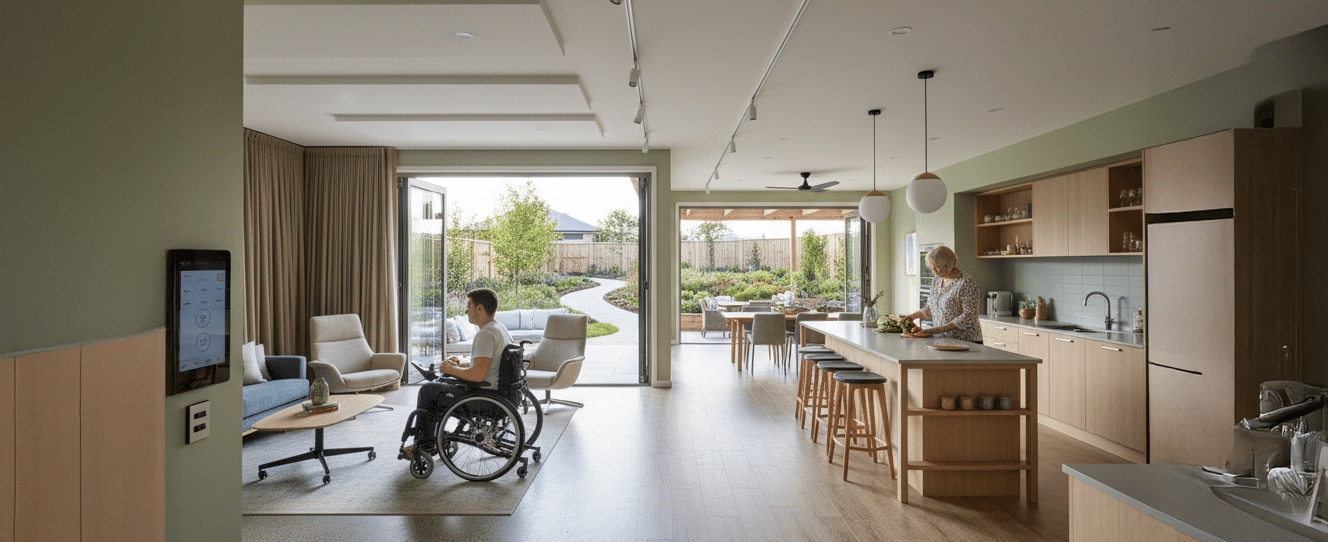
What is Universal Design
Universal Design represents a design philosophy that creates spaces, products, and systems that serve all people regardless of age, ability, or cultural background. Universal Design implements inclusive thinking at the beginning of the design process to create environments that support full and independent participation for all users. Universal Design supports Equal Access by focusing on dignity and flexibility while recognising human diversity as a positive force that guides the creation of adaptable solutions for different life experiences.
The built environment, education, technology, and public services benefit most from this approach because traditional design methods frequently create spaces that exclude people with disability and unique requirements. Universal Design drives innovation through its method of questioning established beliefs while developing solutions that benefit the entire user base instead of focusing on particular groups. The approach supports social justice and human rights by enabling people to maintain their autonomy while feeling safe while participating fully in all life activities.
Seven Principles of Universal Design
The seven principles of Universal Design exist as fundamental guidelines. In the late 1990s, a group of architects, product designers, engineers, and environmental design researchers at North Carolina State University created these principles to help designers create accessible and inclusive environments and products.
The principles serve as tools to assess and enhance usability, flexibility, and accessibility in design and the following details how they can be applied to Specialist Disability Accommodation.
Principal 1. Equitable Use
The design of housing needs to deliver equal usability and dignity to all residents regardless of their abilities. The design of shared areas should create spaces that function well for all users through accessible pathways that do not require alternate routes or separate access points.
Principal 2. Flexibility
The design needs to support various user needs through flexible functionality. The flexibility of the furniture layout, adjustable benchtops with multi-height work surfaces and adaptable storage systems enable residents to create their preferred living environment.
Principal 3. Simplicity
The design elements must present straightforward and easy-to-understand information to users with any level of cognitive ability and experience.
Clear navigation paths, touch-sensitive markers, and contrasting visual elements help people move around independently. Wherever possible, a clear line of sight should be established between the front and rear of the home.
Principal 4. Effective communication
The design elements must present straightforward and easy-to-understand information to users with any level of cognitive ability and experience. Clear navigation paths, touch-sensitive markers, and contrasting visual elements help people move around independently.
Essential information needs to be delivered through three communication channels: visual, auditory, and tactile. The system provides support to residents who have sensory disability and neurodevelopmental conditions. The application of Luminance Contrast principles will assist all occupants, not just people with vision impairment.
Principal 5. High tolerance for error
The design of SDA environments needs to incorporate safety features that protect users from accidents and their resulting consequences. The combination of rounded corners, slip-resistant flooring, and safe appliance placement creates a risk-free environment that maintains visual appeal.
In environments where there may be behaviours of concern, design must also protect staff from attack by providing alternate paths of egress, no points of entrapment and fittings and fixtures that cannot be weaponised.
Principal 6. Minimal effort required
The design should allow users to perform their tasks with minimal physical strain. The system includes automated doors, lever handles and smart home technology, which decreases physical work requirements. Fully integrated hoisting systems should be provided that allow participants to transfer from the bedroom to the bathroom, and where possible, these should be recessed into the ceilings to reduce the clinical feel of the environment.
Principal 7. Suitable space and size for use
The design needs to include sufficient areas for people to move their support equipment, personnel and personal items. It should also include wide circulation paths, accessible bathroom facilities, and private spaces that maintain resident dignity during care activities.
This is achieved by making bedrooms larger than the minimum specified, providing sufficient space for people who use motorised wheelchairs to manoeuvre, and reducing impact with walls, doors, and furniture.
Neurodiverse supportive environments
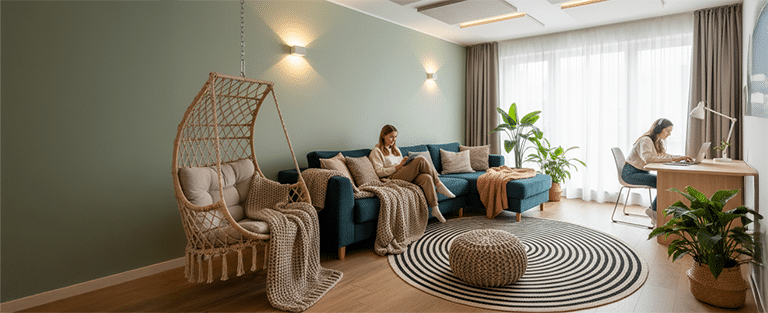
Universal Design for neurodiverse environments creates inclusive spaces through flexible design elements supporting sensory needs, cognitive abilities, and emotional well-being. The built environment affects neurodivergent people differently, so Universal Design creates spaces that minimise sensory overload while providing self-regulation support and straightforward navigation systems.
The home environment of neurodivergent people functions as a sensory environment that either promotes their well-being or creates distressing situations. The way people experience their environment depends on its lighting conditions, textural elements, sound quality, and spatial arrangement, which typical design approaches fail to consider. The combination of harsh overhead illumination, noisy floors, and disorganised spaces creates overwhelming sensory experiences that prevent people from finding peace or security. Spaces that provide gentle illumination, peaceful areas, and structured environments allow the development of control and serenity for users. The features are fundamental requirements for emotional management and daily activities in Specialist Disability Accommodation (SDA) facilities.
Every design choice should incorporate empathy and flexibility when creating spaces for neurodiverse individuals. The combination of rugs, curtains, and ceiling panels with acoustic properties helps minimise background noise and echo to establish a peaceful environment. The ability to adjust lighting intensity and simulate outdoor daylight patterns through systems helps residents maintain their emotional state and sleep patterns. The combination of soft blues and greens and earth tones in colour schemes with textured wall panels and cushioned furniture helps reduce sensory input while creating a comfortable environment. Residents’ emotional regulation depends on bedrooms and shared spaces that incorporate weighted blankets, compression seating, and familiar comfort items. These design elements remain affordable and provide benefits to all users. Universal Design principles applied to support neurodiverse needs result in housing environments that respect autonomy and dignity while upholding the fundamental human right to inclusive living spaces.
The Way Forward
The human right to inclusive housing becomes a tangible reality through Universal Design implementation in Specialist Disability Accommodation (SDA). The design of the SDA home requires absolute implementation of autonomy, safety, and sensory comfort features because they represent essential design requirements. The design process for spaces that support disability needs requires direct involvement of people with disabilities and neurodiverse individuals to ensure their life experiences guide the development of supportive environments.
Universal Design serves as an ethical design philosophy that provides strategic direction for future development. Implementing Universal Design creates economic benefits and predicts future requirements while demonstrating our shared dedication to dignity and inclusion. Every project requires stakeholders, including SDA designers, owners, providers, and SIL partners, to support inclusive design principles as an essential standard. The construction of environments that embody equity, empowerment, and belonging requires our collective effort.

Bruce has over 32 years of experience in disability access, architectural design, documentation & project management
He formed Equal Access Pty Ltd in 2006 in response to growing recognition, that whilst businesses were being urged to respond to their obligations under the Disability Discrimination Act, the majority of assistance available was focused almost entirely upon the needs of the individual with a disability without an understanding of the impacts and practicalities for building owners, managers and consultants.
Bruce also specialises in evacuation procedures and policy for people with a disability and is a member of the Standards Australia development committee FP-017 Emergency Management Planning – Facilities (AS3745)
Categories
Recent Posts
- There will be fatalities! It’s not if, but when!
- Creating Accessible and Inclusive Housing: Universal Design in SDA
- Understanding Luminance Contrast and Colour Contrast for SDA
- Disability Fire Safety Forum: Specialist Disability Accommodation
- Converting an Existing House to Specialist Disability Accommodation