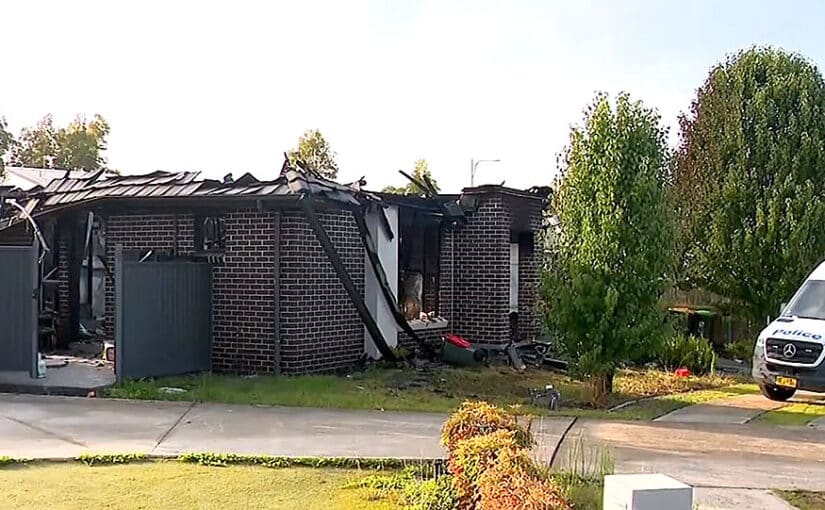
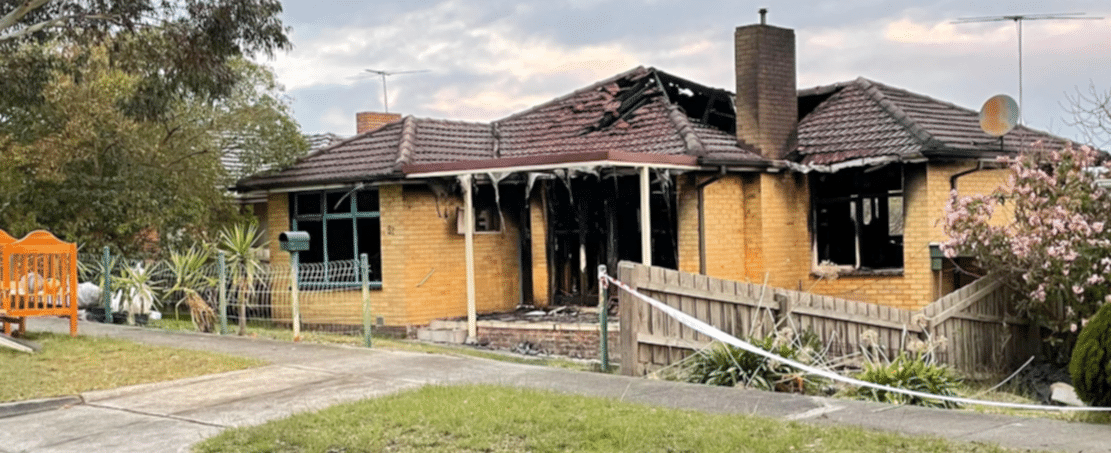
There will be fatalities! It’s not if, but when!


There will be fatalities! It’s not if, but when! was the subheading of a blog post I wrote on 26 October 2017, in which I raised my early concerns about the lack of fire sprinklers and the failure to apply a Class 3 classification under the Building Code of Australia for Specialist Disability Accommodation. View Blog Post.

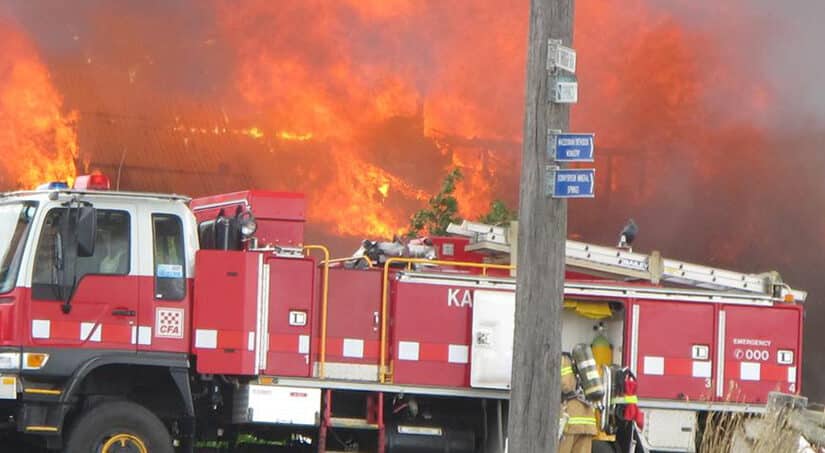
We have now seen with the death of a gentleman named David in a fire at a disability support home in Spring Farm, Sydney, on Saturday, 3 January 2026, that my concerns were well-founded. Blog Post on Spring Farm Fire

David’s death represents a multi-level failure across local, state and federal bodies, including state and territory building commissions and building surveyors to enforce the prescriptive requirements within the Building Code of Australia when providing housing for people with disability. However, as I discuss below, the information and training for responsible parties to undertake their roles is currently insufficient


Failure to Apply the Correct Building Classification

In a blog post I wrote on 21 October 2023 titled “Why the SIL, STA, MTA or SDA Accommodation you’re Providing may be Operating IllegallyView Blog Post. I then followed up with another post titled “The Failures of SDA and Fire SafetyView Blog Post.

In these posts, I examined the occupant profiles of SDA in detail, the rate of burn for an unprotected house, and a review of building classifications nominated for SDA as detailed in the Pricing Arrangements for Specialist Disability Accommodation, along with providing recommendations to protect life.

My conclusion from these posts is that all supported accommodation for people with disability must include fire sprinklers, either AS 2118.4 – Automatic fire sprinkler systems – Residential or AS 2118.5 – Automatic fire sprinkler systems – Domestic, that are determined by the registered building surveyor (RBS) undertaking statutory functions and a fire engineer.


Building Surveyors

One of the key issues I see is the lack of education and guidance provided for building surveyors. When they receive a set of plans to assess, how are they expected to know if it will be housing people with disability, especially when indicators such as grabrails in toilets, etc, are not provided. A lot of their clients will not disclose that it is being used as disability accommodation, as they will want them assessed as class 1b rooming houses, as it is a far cheaper build than class 3. Experienced building surveyors with commercial experience may see some of the spatial giveaways in the design and ask questions, but in most cases, they will not be aware, especially if it is an Improved Liveability or Robust house that, design-wise, is similar to a standard residence.


State & Territory Building Commissions.

We are aware that several state and territory governments are reviewing the classifications of SDA. To date, we have not seen any clear directives that have been issued to building certifiers. There was a case in NSW, Orfali v Commissioner for Fair Trading, that outlined the need to apply Class 3, which I’ll discuss further in this post. However, there is limited awareness of this in other states and territories.

State & Territory Building Commissions are the regulators for the construction sector. Their primary role is to oversee the registration and licensing of practitioners, enforce safety standards, and conduct site audits to ensure compliance with the National Construction Code. The building commissions provide industry oversight and technical guidance through the State or Territory Building Surveyor. Beyond regulation, the Commissions holds significant enforcement powers, including the ability to issue rectification orders for defective work to ensure long-term building quality and accountability.

I would encourage each of these commissions to either individually or collectively be more active in providing building surveyors/certifiers, including municipal building surveyors, with education through practice notes and CPD sessions to increase consultant knowledge on the assessment and approvals for Specialist Disability Accommodation, so they have a clear directive on how SDA must be classified and assessed.


NDIA’s Responsibility

The NDIA is aware of these issues, and we have been involved in discussions with them and the Australian Building Codes Board (ABCB) regarding the application of building classifications, including an additional classification of 1c for supported accommodation, including SDAs.

Towards the end of 2024, I was invited by Fire Rescue Victoria and the National Disability Insurance Scheme (NDIS) Quality and Safeguards Commission to present at the Disability Fire Safety Forum that was focused on improving fire safety for people with disability.

My topic was “Fire safety in class 1, 2 and 3 buildings, Perspectives from a disability access consultant” My presentation can be Viewed Here, and it covered:

  • Defining SDA Participants for BCA Classification
  • Building classifications under the Building Code of Australia
  • What is the role of the onsite overnight assistant (OOA)?
  • SIL Housing risks
  • What needs to change

I believe the NDIA need to take a more proactive role to address this issue by undertaking an internal review of key SDA and SIL documents in consultation with the ABCB and relevant state and territory commissions that includes:

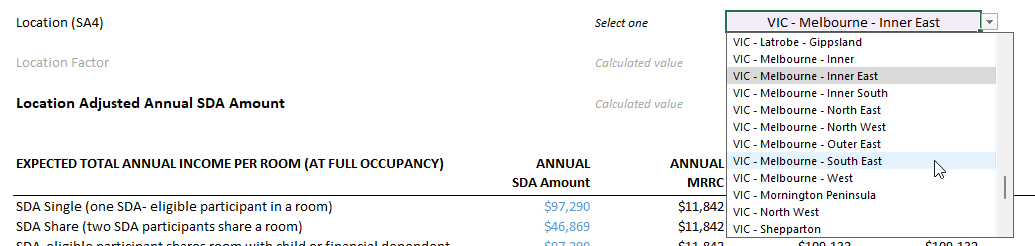
  • Revising the nominated building classifications within Table 4 of the Pricing Arrangements for Specialist Disability accommodation.
  • Reference within the design standards that are currently under review, the performance requirements (not DtS) within the BCA for class 3 buildings to ensure designers understand their obligations, whilst proactively lobbying the Australian Building Codes Board (ABCB) to develop the class 1c classification.
  • Develop a minimum expected standard for SIL housing, including the appropriate building classification that includes the provision of fire sprinklers. This should be done in consultation with the ABCB and include discussions about the suitability of class 1b rooming houses that include residential fire sprinklers, as these are easy and inexpensive to retrofit, as it will not be possible to convert existing SIL housing stock to Class 3 residential care buildings, and would render the majority of SIL housing uninhabitable, leaving residents vulnerable.
  • Develop an Emergency and Disaster Management document in consultation with industry experts, including fire engineers and evacuation planning consultants, that outlines the performance criteria that must be met.


NDIS Practice Standards and Quality Indicators

The NDIS Practice Standards establish the mandatory benchmarks that all registered NDIS providers must meet to ensure the delivery of safe, high-quality, rights-based services, encompassing governance, risk, service delivery, worker competence, and participant safeguards. Each Standard includes specific Quality Indicators, which are the measurable, auditable criteria used by approved auditors to determine whether a provider is achieving the required participant outcomes in practice. Together, they form the core framework for registration, certification, and mid-term audits, as well as continuous improvement and national consistency across the sector. One of its key sections is Emergency and Disaster Management.


Emergency and Disaster Management

The Emergency and Disaster Management section requires providers to plan for and mitigate risks to participants’ health, safety, and well-being, ensuring that critical supports continue before, during, and after any emergency or disaster. This involves preparing for and responding to emergencies, adjusting and rapidly adapting supports, and clearly communicating any changes to workers, participants and their support networks. The governing body must develop, implement, and regularly review emergency and disaster management plans in consultation with participants. It must also actively test and refine these plans for different scenarios and ensure that they are clearly communicated. All workers must be trained to implement the plans effectively

In my discussions with Tania Gomez, from Tania Gomez Consulting, as a specialist consultant who assists SDA, SIL and Core Support providers to become registered and build strong quality systems she expects the following to have been undertaken when she carries out an assessment of businesses:

  1. Have developed and documented “emergency plans” (she teaches this as three levels:
    1. companywide business continuity plans,
    2. site-specific plans and
    3. participant-specific personal emergency evacuation plans (PEEPS),
  2. Plans to be made in consultation with stakeholders
  3. Workers are aware of and trained in the plans
  4. Undertake thorough testing of the plans regularly with workers and stakeholders where possible
  5. Schedule a review of plans on a regular basis


It should be recognised that the supporting documentation is vague, and there is no specific mention of SIL for providers to apply. This is a key area that requires improvement, as clarity of obligations is desperately needed.


Auditors of SIL Providers

I have had multiple discussions with SIL providers and the issues they have faced during audits, specifically the evacuation plans they had prepared, which often rely on staff turning into superhumans and evacuating all participants prior to emergency services arriving, is very concerning.

In my opinion, support staff should not be responsible for the life safety and evacuation of participants, as they are not trained emergency services personnel. The spread of smoke and flame is quick and unpredictable, as demonstrated here and covered in this post  A Tragic Spring Farm Fire and the Imperative for Stronger Safety Frameworks in Disability Housing


Evacuation Plans and Policies should not be expected
to replace safe buildings with Fire Sprinklers


Expecting staff to manage the evacuation of residents in an emergency, particularly in the event of a fire, is not feasible. It will also be impossible to execute such plans, nor should these plans be expected to replace poor design in buildings that lack the required fire sprinkler system.

More guidance and education must be provided to both SIL providers and auditors so they can understand what is possible vs. what is expected based on unproven expectations.

Staff should be prepared and expected to evacuate themselves as quickly as possible in an emergency to protect their own life, ensuring they do not delay or place themselves at unnecessary risk. To support an efficient and informed emergency response, an emergency kit must be prepared and kept in a readily accessible location, allowing it to be retrieved immediately in the event of evacuation. This kit should contain essential information for first responders, including a current Personal Emergency Evacuation Plan (PEEP) for each participant, copies of their basic medical records, and a laminated floor plan of the dwelling clearly identifying the location of all bedrooms. In multi-storey or apartment settings, the kit must also include a schedule listing the apartment numbers and levels where each participant resides, enabling emergency personnel to quickly locate individuals and prioritise assistance where needed.


Civil and Administrative Tribunal New South Wales

Orfali v Commissioner for Fair Trading

Civil & Administrative Tribunal NSW

We have seen the following decision by the Civil and Administrative Tribunal of New South Wales, which confirms my beliefs that building classifications for SDA should be class 3. Key extracts of the decision are following that clearly state they consider SDA must be class 3:

  1. Mr Orfali applied for review of the decisions of the Commissioner for Fair Trading (the Commissioner), made on internal review, to cancel his registrations as a registered certifier and to disqualify him from being registered for a period of ten years.
  2. I have found that the disciplinary grounds the Commissioner relied upon are established. Having regard to the seriousness of Mr Orfali’s conduct and other matters, I consider that the correct and preferable decisions are those made by the internal review officer. Accordingly, I have affirmed the Commissioner’s decisions.


The key grounds relating to accommodation for people with disability are as follows

  1. There were clear indications, in the application documents provided to Mr Orfali, that the purpose for which the buildings were designed was to accommodate residents with disabilities. Each of the CDCs was accompanied by SDA and NDIS design certificates and a plan of management referring to each resident’s special needs.
  2. Mr Orfali did not consider the purpose for which the buildings were designed to be significant in classifying the buildings under the BCA. He appeared to be reluctant to anticipate how the building would likely be used, stating in an affidavit: “There is no way of knowing, at the time of certification, what type of residents will be occupying a dwelling (unless explicitly stated in the Plan of Management). Nor is there any way of knowing what percentage of residents, if any, will suffer from a disability, or need physical assistance in their day-to-day activities (again, unless stated in the Plan of Management).”
  3. Such an approach is inconsistent with that required when classifying buildings under the BCA. For example, a certifier is required to determine whether the purpose of a building is to be “a place of residence where 10% or more of persons who reside there need physical assistance in conducting their daily activities” when deciding whether it is a residential care building (class 3). Further, the determination of purpose depends upon an assessment of all relevant documents. It is not simply a matter of adopting what is stated in the Plan of Management.
  4. Mr Orfali should have asked himself, when considering whether each proposed building was a class 1b building, whether it was “a boarding house, guest house, hostel or the like.” That is not something which featured in his reasoning, as set out in his affidavit evidence. A building containing self-contained units for persons with a disability is not a boarding house, guest house or hostel, and is sufficiently different from those forms of accommodation as not to be captured by the phrase, “or the like”.
  5. On the other hand, each of the proposed buildings was plainly “accommodation for people with disability” (within class 3) as well as “a residential care building” (within class 3). Each was a residential care building because it was plain that the purpose of the building was to house people who would need physical assistance in conducting their daily activities and to evacuate the building during an emergency, and that it was intended that at least 10% of the residents (in fact, a much greater proportion) would be such people.
  6. In these circumstances, each of the proposed buildings for which Mr Orfali issued a CDC was a class 3 building.


Fire safety standards

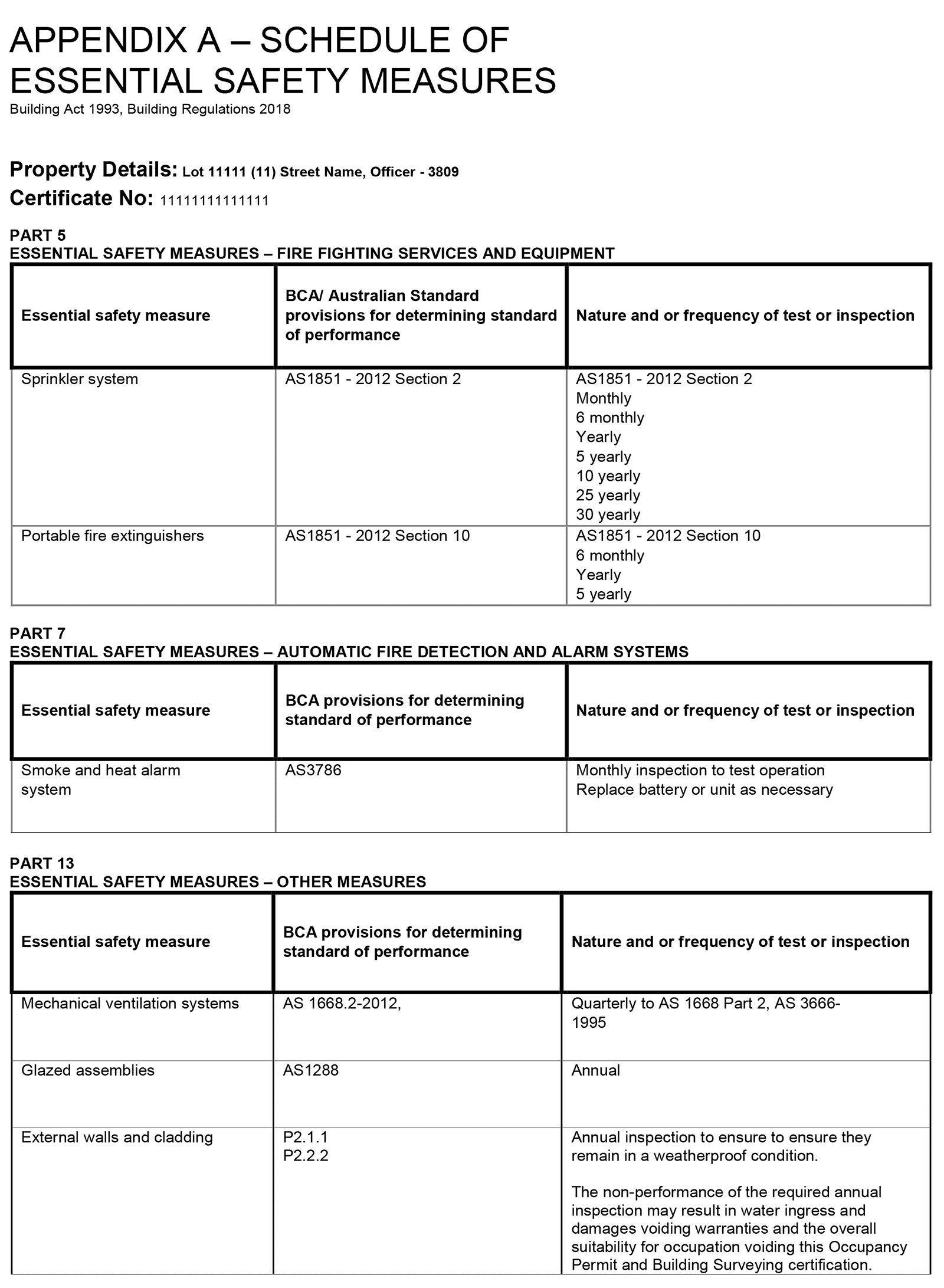
  1. The BCA contains more stringent fire safety requirements for class 3 buildings than the requirements applicable to class 1 buildings. Under Part E1 of the BCA, a sprinkler system must be installed in some class 3 buildings and must be installed throughout all class 3 buildings used as a residential care building. Under Part E2, class 3 buildings must be provided with an automatic smoke detection and alarm system complying with certain specifications.
  2. Mr Orfali did not identify that these minimum fire safety measures were required in the proposed fire safety schedule attached to each CDC and to each modified CDC (except in the case of the Thornton Development). In the case of the Thornton Development, Mr Orfali identified the requirement for an automatic smoke detection and an alarm system with a building occupant warning system.
  3. No provision for these required fire safety measures appeared in any of the CDC stamped plans (including the plans for the Thornton Development).


This is one example that demonstrates neither the building code or regulators recognise SDA or SIL accommodation. Instead, they reference the Deemed to Satisfy requirements of the Building Code of Australia to determine whether the purpose of a building is to be “a place of residence where 10% or more of persons who reside there need physical assistance in conducting their daily activities or to evacuate in an emergency. The very purpose of SDA and SIL housing is to support participants, so these requirements cannot be ignored, and in turn means all accommodation must be Class 3 Residential Care.


Download the decision in full:
Orfali v Commissioner for Fair Trading – NSW Caselaw


Local Governments Responsibility

Essential safety measures and liability

Councils have the responsibility for enforcing building safety within their municipality.

  • The municipal building surveyor or chief officer of the relevant fire authority is responsible for enforcing the maintenance provisions of the Regulations.
  • Building occupants have an obligation to ensure that all exits and paths of travel to exits are kept readily accessible, functional, and clear of obstructions.
  • Building owners must ensure that an essential safety measure is maintained so that it operates satisfactorily.

Councils are also responsible for ensuring buildings within their municipality are used appropriately based on their approved building classification.


SIL Housing

Of particular concern to me is the provision of Supported Independent Living (SIL) houses, which offer accommodation and paid support to NDIS participants who receive SIL funding but do not qualify for Specialist Disability Accommodation (SDA). Funding commonly covers both the dwelling and staffing, often organised on a 1:3 model where each participant’s package contributes to one of three 8‑hour support shifts. There are thousands of these dwellings across Australia. Short‑Term Accommodation (STA) and Medium‑Term Accommodation (MTA) are often delivered in similarly configured buildings. The NDIA does not currently mandate specific life‑safety provisions for SIL houses.

Many SIL homes are standard Class 1a houses purchased or rented by providers and repurposed to deliver 24/7 support, a use that can conflict with the Building Code of Australia. These dwellings frequently have only minimal accessibility modifications, external doors and escape routes that are not safe for wheelchair users, and life‑safety requirements limited to smoke alarms (often not interconnected in older homes). There is typically no requirement for sprinklers, extinguishers or other active fire protection, and emergency services or local authorities may be unaware these houses are being used to house people with very high support needs. These factors make SIL housing a significant safety concern.

I raised these concerns during my presentations at state-based SIL Summits in Melbourne, Sydney, Brisbane, Adelaide and Perth during 2024 and 2025 organised by Tania Gomez Consulting. Tania provides several resources for SIL Providers. View Resources.


Change of Use

When a building is going to be used for a purpose not covered by its initial occupancy permit, a ‘Change of Use’ application must be made to a building surveyor/certifier. Depending on the type of change, this may have town planning/DA implications. For example, changing a class 6 shop to a class 5 office is seen as a change of use. Changing a class 6 clothing shop to a class 6 cafe is also a change of use, even though the building classification remains the same.

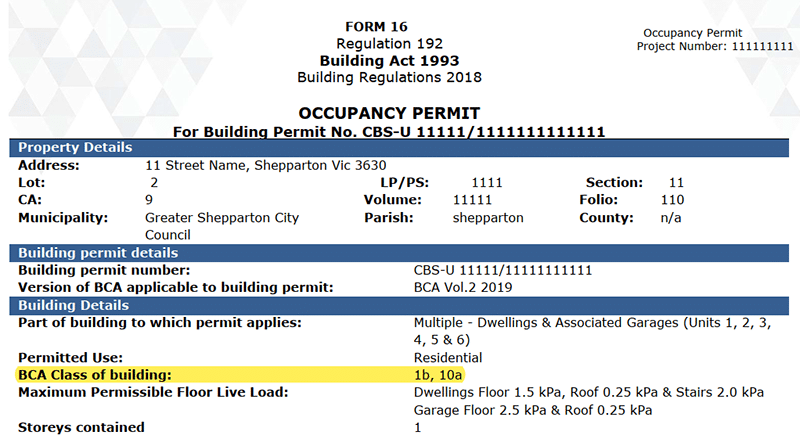
The same requirements apply to housing. For example, a Class 1a house is typically provided for an individual and family use. It cannot be used to accommodate multiple unrelated persons, such as a class 1b rooming. It is prohibited to use a class 1a house as a class 1b rooming house, as the design of a 1b includes additional elements such as wheelchair accessibility and evacuation lighting in addition to interconnected smoke alarms. This change triggers the need for a change of use approval to change the house from 1a to 1b or in the case of a residential care building, class 3. The current issue with SIL housing is that most are located within Class 1a dwellings, and as previously discussed, it is not possible to close these down, as there are no other options for people to live in.


Responsibility

Back in 2011, with the introduction of the Disability Access to Premises Standard, local governments began cracking down on illegally used buildings, particularly rooming houses that were used for student accommodation. They compared student accommodation websites with their own records to identify buildings that were being used illegally and served building notices accordingly.

With SIL housing, this would be more difficult. Perhaps a shared register between the NDIA and local government authorities should be established to enable local governments to identify buildings being used for NDIS services and take enforcement action.

However, if this were to happen and thousands of incorrectly classified SDA and SIL houses would be closed. Where would the participants go? This would mean we are faced with a dichotomy between participant safety and participant housing and homelessness, with added strain placed on hospitals.


Retrofitting Fire Sprinklers

We are aware that the Australia Building Codes Board has been in discussions with the State and Territories governments to introduce a new Class 1c building classification based on Class 1b with the addition of fire sprinklers. We understand they may also include additional smoke protection measures; however, they have been unable to confirm this.

Personally, I believe a Class 1b building that already includes interconnected smoke alarms and emergency lighting, as well as fire sprinklers, would be the perfect solution for SDAs due to their low occupancy numbers. Class 3 residential care buildings are typically larger-scale facilities providing supported accommodation. The following are examples of non-SDA residential care buildings:

  • Assisted Aged Care Facilities (Non-Class 9c): Accommodation for the elderly that provides care but does not meet the full 24-hour medical staffing requirements of a Class 9c aged care building.
  • Children’s Residential Care: Facilities designed for children who require specific physical assistance or special care.
  • Large Boarding Houses with Care Services: Hostels or boarding houses that exceed 300m² or 12 residents and include care-type services for vulnerable occupants.
  • Converted Domestic Dwellings: Standard houses (formerly Class 1a) that have been modified to house multiple unrelated residents (e.g., six residents and a live-in carer) requiring high-level evacuation assistance.

It is reasonable to accept that SDA does not compare to the above types of accommodation based on the low occupancy numbers, as the maximum number of participants within SDA is 5. I would argue that for up to three participants, a Class 1c with residential fire sprinklers is sufficient; however, for SDA with four or five participants, which is classified as a group home, a Class 3 residential care classification should be applied.

This would enable a cost-efficient retrofitting of residential fire sprinklers in SDA and SIL housing that is currently unprotected, dramatically improving participant safety.


Cost to Install Residential Fire Sprinklers

Two properties we took over management for in late 2025 were retrofitted at a cost of $24,000/each, including static storage tanks. This, for any provider, could be easily written off over a handful of years.


Home Fire Sprinkler Coalition Australia

The Home Fire Sprinkler Coalition Australia (HFSCA) was established to inform the public and industry stakeholders about the life-saving value of home fire sprinkler protection. HFSCA has was formed by AFAC (the National Council for Fire and Emergency services) and FPA Australia (Fire Protection Association Australia) to provide the leading national resource for independent, non-commercial information about home fire sprinklers. Their website includes excellent resources for the type of sprinkler system I am suggesting.

Visit the Home Fire Sprinkler Coalition Australia website


Need to learn more?

Understanding an organisation’s Liability and Risk, providing Fire Safe SDA & SIL
 

Seminars for SDA Organisations and Individuals

In this seminar, you will gain an understanding of the complexities in providing fire-safe Specialist Disability Accommodation. It will discuss an organisation’s liabilities and offer solutions to improve survivability in an emergency.


View Seminar Details 


Creating Accessible and Inclusive Housing: Universal Design in SDA

What is Universal Design

Universal Design represents a design philosophy that creates spaces, products, and systems that serve all people regardless of age, ability, or cultural background. Universal Design implements inclusive thinking at the beginning of the design process to create environments that support full and independent participation for all users. Universal Design supports Equal Access by focusing on dignity and flexibility while recognising human diversity as a positive force that guides the creation of adaptable solutions for different life experiences.

The built environment, education, technology, and public services benefit most from this approach because traditional design methods frequently create spaces that exclude people with disability and unique requirements. Universal Design drives innovation through its method of questioning established beliefs while developing solutions that benefit the entire user base instead of focusing on particular groups. The approach supports social justice and human rights by enabling people to maintain their autonomy while feeling safe while participating fully in all life activities.


Seven Principles of Universal Design

The seven principles of Universal Design exist as fundamental guidelines. In the late 1990s, a group of architects, product designers, engineers, and environmental design researchers at North Carolina State University created these principles to help designers create accessible and inclusive environments and products.

The principles serve as tools to assess and enhance usability, flexibility, and accessibility in design and the following details how they can be applied to Specialist Disability Accommodation.

 

Principal 1. Equitable Use

The design of housing needs to deliver equal usability and dignity to all residents regardless of their abilities. The design of shared areas should create spaces that function well for all users through accessible pathways that do not require alternate routes or separate access points.


Principal 2. Flexibility

The design needs to support various user needs through flexible functionality. The flexibility of the furniture layout, adjustable benchtops with multi-height work surfaces and adaptable storage systems enable residents to create their preferred living environment.


Principal 3. Simplicity

The design elements must present straightforward and easy-to-understand information to users with any level of cognitive ability and experience.

Clear navigation paths, touch-sensitive markers, and contrasting visual elements help people move around independently. Wherever possible, a clear line of sight should be established between the front and rear of the home.


Principal 4. Effective communication

The design elements must present straightforward and easy-to-understand information to users with any level of cognitive ability and experience. Clear navigation paths, touch-sensitive markers, and contrasting visual elements help people move around independently.

Essential information needs to be delivered through three communication channels: visual, auditory, and tactile. The system provides support to residents who have sensory disability and neurodevelopmental conditions. The application of Luminance Contrast principles will assist all occupants, not just people with vision impairment.


Principal 5. High tolerance for error

The design of SDA environments needs to incorporate safety features that protect users from accidents and their resulting consequences. The combination of rounded corners, slip-resistant flooring, and safe appliance placement creates a risk-free environment that maintains visual appeal.

In environments where there may be behaviours of concern, design must also protect staff from attack by providing alternate paths of egress, no points of entrapment and fittings and fixtures that cannot be weaponised.


Principal 6. Minimal effort required

The design should allow users to perform their tasks with minimal physical strain. The system includes automated doors, lever handles and smart home technology, which decreases physical work requirements. Fully integrated hoisting systems should be provided that allow participants to transfer from the bedroom to the bathroom, and where possible, these should be recessed into the ceilings to reduce the clinical feel of the environment.


Principal 7. Suitable space and size for use

The design needs to include sufficient areas for people to move their support equipment, personnel and personal items. It should also include wide circulation paths, accessible bathroom facilities, and private spaces that maintain resident dignity during care activities.

This is achieved by making bedrooms larger than the minimum specified, providing sufficient space for people who use motorised wheelchairs to manoeuvre, and reducing impact with walls, doors, and furniture.


Neurodiverse supportive environments

Neurodiverse supportive environments


Universal Design for neurodiverse environments creates inclusive spaces through flexible design elements supporting sensory needs, cognitive abilities, and emotional well-being. The built environment affects neurodivergent people differently, so Universal Design creates spaces that minimise sensory overload while providing self-regulation support and straightforward navigation systems.

The home environment of neurodivergent people functions as a sensory environment that either promotes their well-being or creates distressing situations. The way people experience their environment depends on its lighting conditions, textural elements, sound quality, and spatial arrangement, which typical design approaches fail to consider. The combination of harsh overhead illumination, noisy floors, and disorganised spaces creates overwhelming sensory experiences that prevent people from finding peace or security. Spaces that provide gentle illumination, peaceful areas, and structured environments allow the development of control and serenity for users. The features are fundamental requirements for emotional management and daily activities in Specialist Disability Accommodation (SDA) facilities.

Every design choice should incorporate empathy and flexibility when creating spaces for neurodiverse individuals. The combination of rugs, curtains, and ceiling panels with acoustic properties helps minimise background noise and echo to establish a peaceful environment. The ability to adjust lighting intensity and simulate outdoor daylight patterns through systems helps residents maintain their emotional state and sleep patterns. The combination of soft blues and greens and earth tones in colour schemes with textured wall panels and cushioned furniture helps reduce sensory input while creating a comfortable environment. Residents’ emotional regulation depends on bedrooms and shared spaces that incorporate weighted blankets, compression seating, and familiar comfort items. These design elements remain affordable and provide benefits to all users. Universal Design principles applied to support neurodiverse needs result in housing environments that respect autonomy and dignity while upholding the fundamental human right to inclusive living spaces.


The Way Forward

The human right to inclusive housing becomes a tangible reality through Universal Design implementation in Specialist Disability Accommodation (SDA). The design of the SDA home requires absolute implementation of autonomy, safety, and sensory comfort features because they represent essential design requirements. The design process for spaces that support disability needs requires direct involvement of people with disabilities and neurodiverse individuals to ensure their life experiences guide the development of supportive environments.

Universal Design serves as an ethical design philosophy that provides strategic direction for future development. Implementing Universal Design creates economic benefits and predicts future requirements while demonstrating our shared dedication to dignity and inclusion. Every project requires stakeholders, including SDA designers, owners, providers, and SIL partners, to support inclusive design principles as an essential standard. The construction of environments that embody equity, empowerment, and belonging requires our collective effort.

Understanding Luminance Contrast and Colour Contrast for SDA

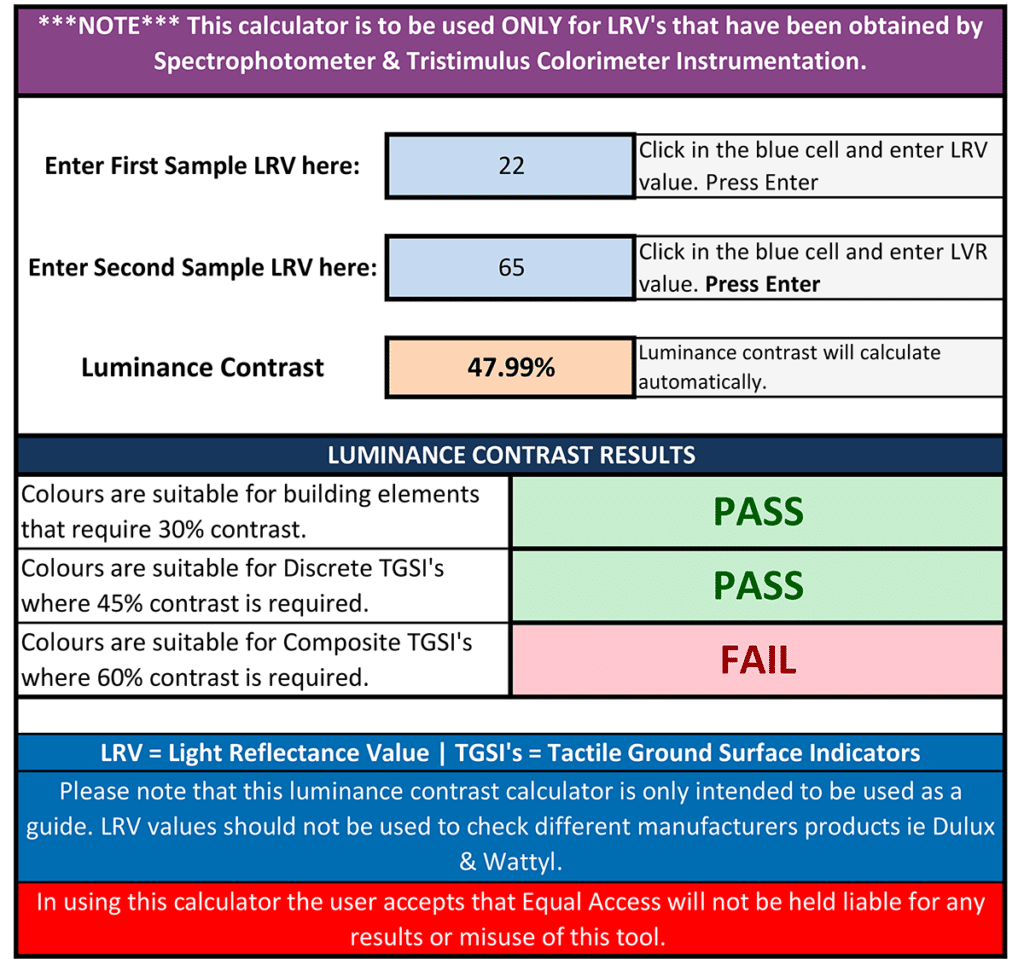
Over the Christmas break, I was catching up on some podcasts, and one caught my attention because it contained incorrect information that confused Colour Contrast and Luminance Contrast whilst misquoting the prescriptive requirements, including 60% contrast being required and using paint swatches against door frames to work out the level of compliance.

In this blog, I will review the prescriptive requirements for Luminance Contrast and Colour Contrast as detailed in the SDA Design Standards so people can refer to factual information rather than incorrect speculation. This is why you need to ensure your SDA Assessor and accredited provider understand these requirements, especially for risk mitigation.


What the SDA Design Standards Require

19.1 All doorways shall have a minimum luminance contrast of 30% provided between:

  • Door leaf and door jamb; OR
  • Door leaf and adjacent
    wall; OR
  • Architrave and wall; OR
  • Door leaf and architrave;
    OR
  • Door jamb and adjacent wall.


Calculating Luminance Contrast

The minimum width of the area of luminance contrast shall be 50 mm.

The formula used for the assessment of luminance contrast shall be the Bowman-Sapolinski equation of;
125(Y2-Y1)/(Y1+Y2+25) where Y2 is the LRV of the lighter area and Y1 is the LRV of the darker area.

19.2 Solid (and non-translucent) contrasting glazing strip of 75mm width and between 900mm to 1000mm above FFL shall be provided for the full width of a glazed area which could be mistaken for an opening

19.3 Toilet seat shall have a minimum luminance contrast of 30% with the background (example, pan, wall or floor against which it is viewed).

19.4 Colour contrast shall be provided between floor surfaces and wall surfaces


What Is Luminance Contrast

Luminance contrast, as outlined in Australian Standard AS 1428.1-2009, refers to the comparison of light reflected from one surface or component to the light reflected from another surface or component. This concept is crucial in various fields, including design and accessibility, as it helps ensure that different elements are distinguishable from one another.

It’s important to note that luminance contrast is not about the difference in colour or colour contrast. Instead, it focuses on the difference in the light-reflective properties of each colour. This means that two colours can have a high luminance contrast even if they are similar in hue as long as their reflective properties differ significantly. Conversely, two colours with different hues might have low luminance contrast if their reflective properties are similar.

Understanding luminance contrast is essential for creating environments that are accessible to everyone, including people with vision impairment. By ensuring sufficient contrast between surfaces and components, designers can make spaces easier to navigate and use. This principle is applied in various contexts, such as:

  • All doorways shall have a minimum luminance contrast of 30% provided between—
    • door leaf and door jamb;
    • door leaf and adjacent wall;
    • architrave and wall;
    • door leaf and architrave; or
    • door jamb and adjacent wall.
    • The minimum width of the area of luminance contrast shall be 50 mm.
  • Toilet seats
  • Tactile ground surface indicators
  • Stair nosing’s
  • Signage
  • Visual indicators on glazing


Measuring Luminance Contrast

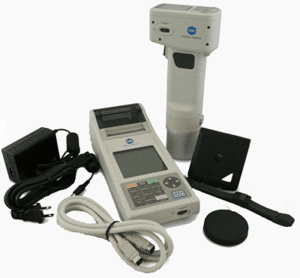
There are two methods to measure luminance contrast: in a laboratory or on-site. Both methods require the use of a costly Tristimulus Colourimeter or Spectrophotometer to measure the ‘Luminance Reflective Value’ (LRV) of each surface. Luckily, most reputable paint, tactile, and nosing manufacturers provide this information to designers, and it is often available on colour charts as an ‘LRV’ value.


Testing Equipment

Equal Access has spent over forty thousand dollars to purchase the appropriate testing equipment for Luminance Contrast Testing to ensure all testing results are fully compliant and can be relied upon by our clients.

For most testing, we use a tristimulus colourimeter with diffuse illumination/normal viewing (d/o) geometry alongside the CIE Standard Illuminant D65. The instrument is capable of measuring absolute CIE values to calculate Yxy. The tristimulus value Y defines the measured luminous reflectance, while the chromaticity coordinates x and y indicate the colour.

tristimulus-colorimeter-for-luminance-contrast-testing-sda

The luminance contrast (C) of two surfaces has to be calculated using the following equation:

  • C = 125 (Y2 − Y1)/(Y1 + Y2 + 25) Bowman-Sapolinski equation*
  • where
    • C = luminance contrast
    • Y1 and Y2 = luminous reflectance values of the two surfaces

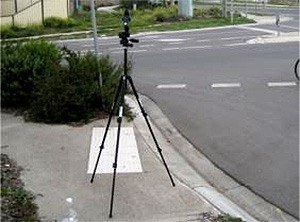
We also use a Single Lens Reflex Luminance Meter, commonly known as a Photometer with a 1° measurement field and a spectral responsivity approximating the CIE 1931 Standard Observer V (λ) function as specified in ISO 11664-1 for testing contrasting bands on glazing.

SDA-On-Site-Luminance-Contrast-Testing-Photometer


Luminance Contrast Calculators

Most product manufacturers now provide LRV values for their products, including paint, TGSIs, nosings, floor coverings, etc., so confirming the product’s luminance contrast is straightforward.

To assist, we have developed two online Luminance Contrast Calculators to assist designers and certifiers in checking if two colours will achieve a minimum luminance contrast, which takes the hard work out of calculating the value yourself (and without having to decipher the calculations such as the Bowman-Sapolinski equation C = 125 (Y2 − Y1)/(Y1 + Y2 + 25)). It simply requires the user to enter the two values to determine the luminance contrast of the two colours.

Luminance Contrast Calculator

Access the Free Calculator


Luminance and Colour Contrast Examples

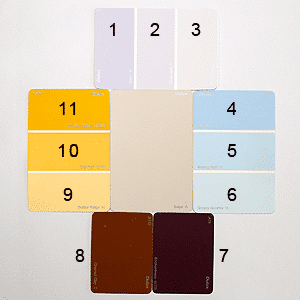
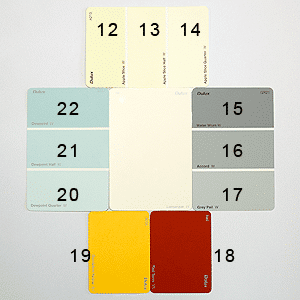
The following are examples of both Luminance Contrast and Colour Contrast. You can see where there are distinct colour differences; the difference in luminance contrast is minimal.

SDA-Luminance-Contrast-Paint

No.    Colour                     Luminance Contrast %
1         Opus 64                     0.9
2         Opus Half 71             4.7
3         Opus Quarter 78      9.7
4         Breezy 61                  13
5         Breezy Half 69          6.6
6         Breezy Quarter 76   1.4
7         Enchantress 9           77.1
8         Charred Clay 14       68.4
9         Butter Ridge 76        1.4
10       Bee Hall 63                1.7
11        Capitol Yellow 54     9.6

Contrasting with the central base colour, Dulux Lamarque: LRV 89

No.  Colour                            Luminance Contrast %
12     Apple Slice 85                 2.6
13     Apple Slice Half 88        0.7
14     Apple Slice Quarter 90  0.7
15     Water Worn 33               47.7
16     Accord 45                       34.6
17     Grey Pail 56                   24.3
18     Red Terra 16                 70.2
19     Dandelion Yellow 67     15.2
20     Dewpoint 77                   7.9
21     Dewpoint Half 70           13
22     Dewpoint Quarter 62    19.2


Additional Resources

Disability Fire Safety Forum: Specialist Disability Accommodation

Fire safety in SDA Class 1, 2 and 3 buildings
Perspectives from a Disability Access Consultant

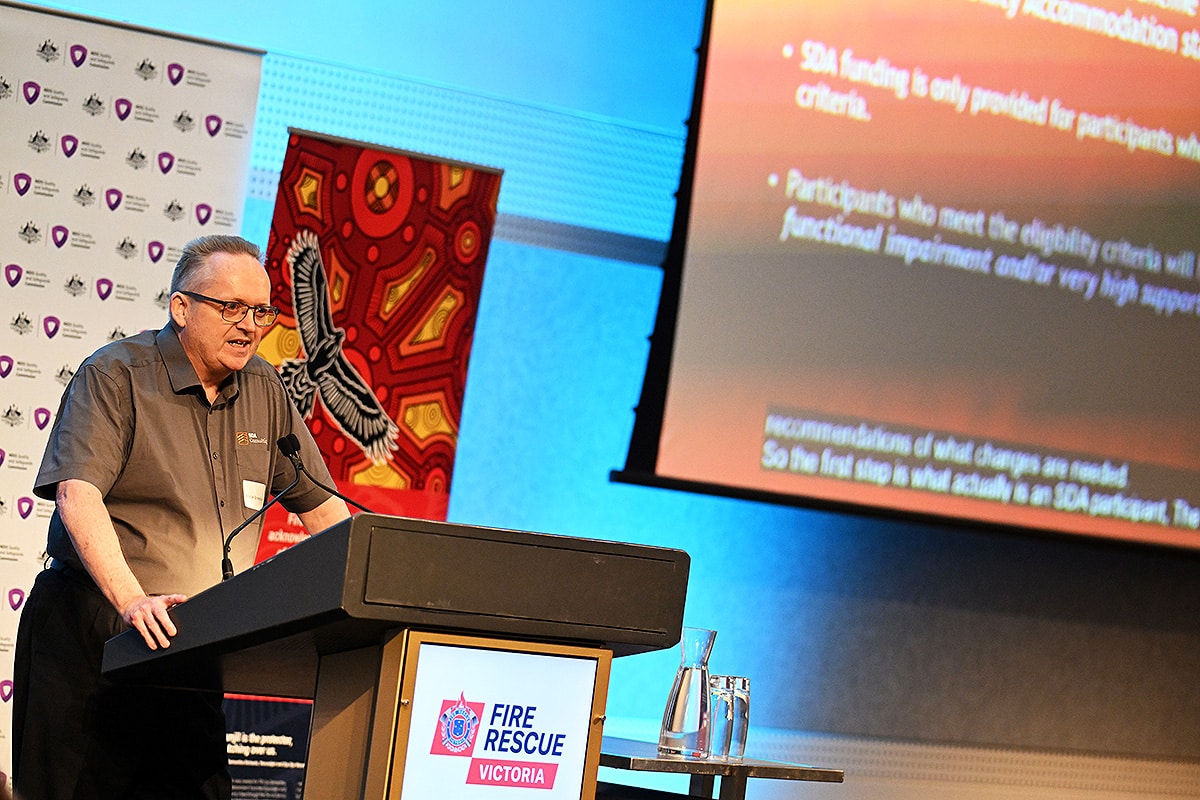
Bruce Bromley presenting at the SDA Disability Fire Safety ForumTowards the end of 2024, I was invited by Fire Rescue Victoria and the National Disability Insurance Scheme (NDIS) Quality and Safeguards Commission to present at the Disability Fire Safety Forum that was focused on Improving fire safety for people with disability.

The forum heard from a range of keynote speakers, including the Minister for the NDIS, the Hon Bill Shorten MP, followed by a series of practical workshops. The event aimed to identify challenges and risks around fire safety for people with disability, with an emphasis on exploring solutions.


My Presentation

This is a copy of my presentation on LinkedIn 

View the Presentation on Linkedin here


Topics

The topics of my presentation included:

  • Defining SDA Participants for BCA Classification
  • Building classifications under the Building Code of Australia
    • Class 1A
    • Class 1b
    • Class 3
    • Class 2
  • What is the role of the onsite overnight assistant (OOA)?
  • SIL Housing risks
  • What needs to change
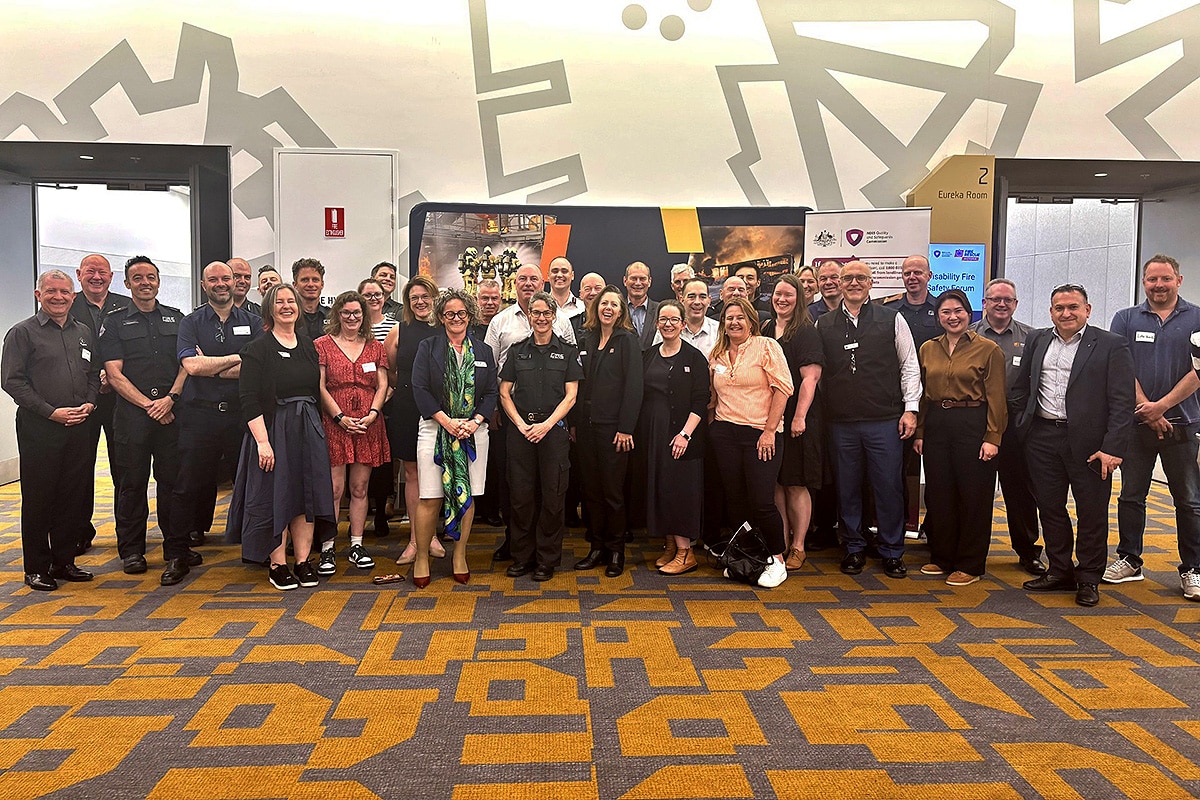
Group photo from the SDA Disability Fire Safety Forum
Attendees at the Disability Fire Safety Forum

Converting an Existing House to Specialist Disability Accommodation

Also, check out our page.

How to Design, Develop and Build Specialist Disability Accommodation


What needs to be considered when refurbishing an existing dwelling?

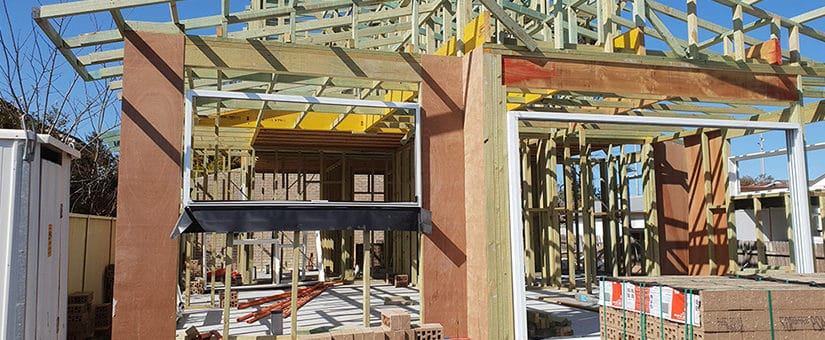
Each week, we receive a number of calls from people looking to convert an existing 1a house into Specialist Disability Accommodation (SDA). Whilst this is possible, it is generally not a cost-effective exercise.


The Pricing Arrangements for Specialist Disability Accommodation 2021-22 states for New Build is as follows:

A dwelling is a New Build if it meets all of the following five conditions:

1). either:

a) it was issued its first certificate of occupancy (or equivalent) on or after 1 April 2016; or
b) it has been renovated or refurbished and issued with a certificate of occupancy (or equivalent) after 1 April 2016, and:

i) because of the renovation or refurbishment, the dwelling meets the Minimum Requirements for a Design Category other than Basic design set out at Step 2B below; and

ii) the cost of the refurbishment is equal to or greater than the amount set out in Appendix F – Minimum Refurbishment Costs for New Builds (2021-22)and 

2). either:

a) it is enrolled to house five or fewer long-term residents (excluding support staff); or
b) it is the home of a participant who intends to provide SDA to themselves (as a registered provider) and to reside there with the participant’s spouse or de facto partner and children; and

3) all its shared areas, and any bedrooms for use by SDA-eligible participants comply with the Minimum Requirements for a Design Category other than Basic design set out at Step 2B below;

4) it does not breach the density restrictions for New Builds in s 31 of the SDA Rules. The density restrictions apply when there are multiple dwellings on a single parcel of land; and

5) fewer than 20 years have elapsed from the date the certificate of occupancy (or equivalent) in paragraph 1 of the Definition of New Build above was issued. When 20 years have elapsed from the date of the certificate of occupancy (or equivalent) the enrolment will convert to Existing Stock.


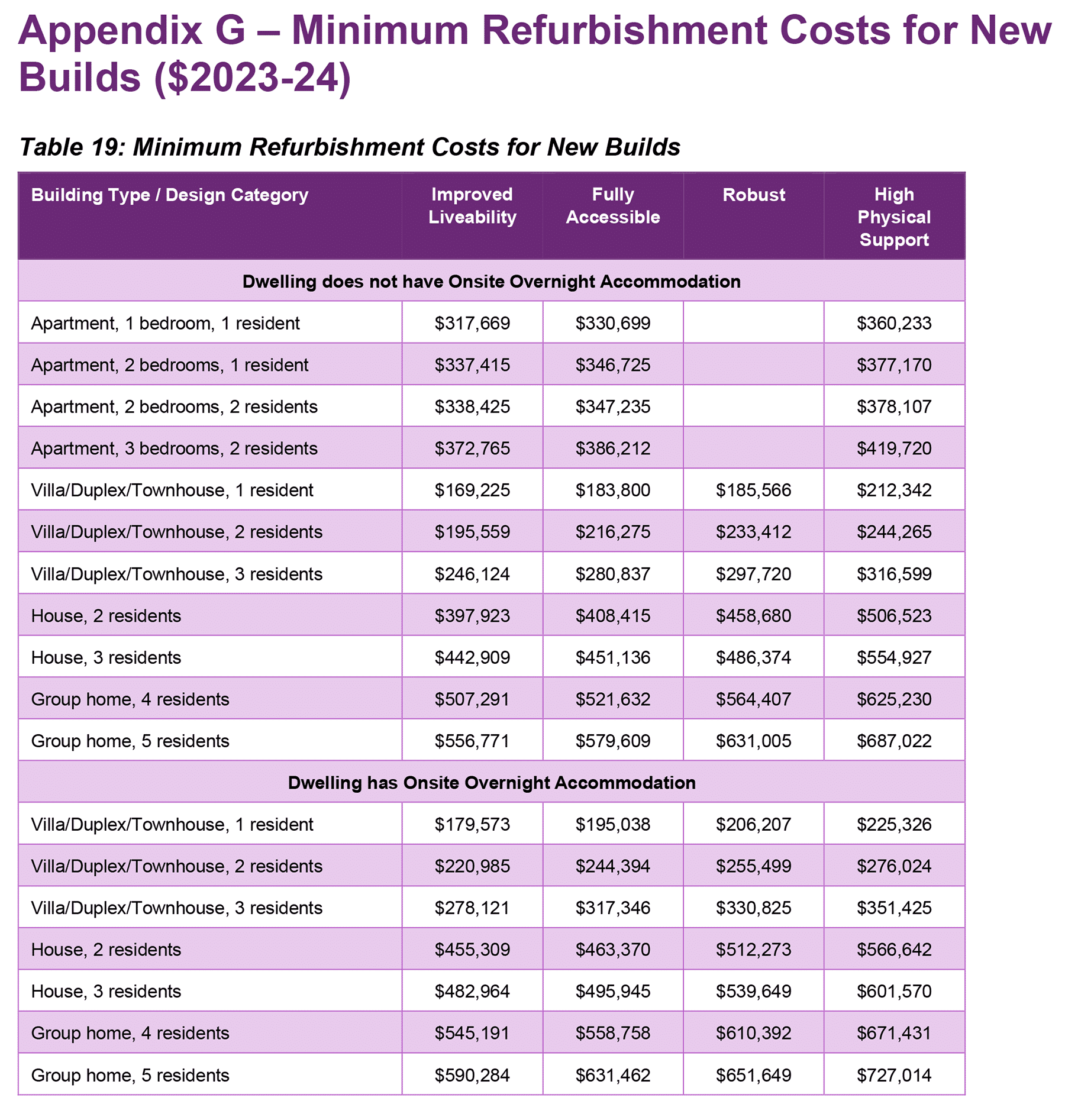
Appendix F – Minimum Refurbishment Costs for New Builds

The following is the extract from the Pricing Arrangements for Specialist Disability Accommodation 2021-22

Appendix G – Minimum Refurbishment Costs for New BuildsClick table to enlarge


In Simple English

Developers/ investors have two options when purchasing a property: convert into SDA and achieve compliance.


Option 1A

To be considered a new build, you can own or purchase a dwelling issued with its first certificate of occupancy (or equivalent) for use as SDA on or after 1 April 2016.  In most cases, for the first few years after 2016, the dwelling may have been designed to the old SDA standards that included Liveable Housing Guidelines (LHA).

NOTE the critical condition of the “first certificate of occupancy” for the dwelling. If its first certificate of occupancy was issued for a non-SDA dwelling, then this option is not applicable.


Option 1B

For a refurbishment or renovation of an existing dwelling (that already has a certificate of occupancy for non-SDA use) to be considered a new build, the dwelling must be issued with a certificate of occupancy (or equivalent) after 1 April 2016, and the refurbishment to the dwelling must:

  1. Meet the Minimum Requirements for the Selected Design Category.
  2. The cost to refurbish or renovate the home must be detailed in Appendix F – Minimum Refurbishment Costs for New Builds.

Therefore, the total investment must include the Purchase price of the house and land + Minimum Refurbishment Cost.


Option 2

For existing supported accommodation to be considered a new build, the following requirements must be met.

The SDA is already enrolled in housing five or fewer long-term residents (excluding support staff), or it is the home of a participant who intends to provide SDA to themselves (as a registered provider) and to reside there with the participant’s spouse or de facto partner and children.

All its shared areas and any bedrooms for use by SDA-eligible participants comply with the Minimum Requirements for a Design Category and fewer than 20 years have elapsed from the date the certificate of occupancy (or equivalent) was issued. When 20 years have elapsed from the date of the certificate of occupancy (or equivalent), the enrolment will convert to Existing Stock.

Additionally, the SDA must not breach the density restrictions for New Builds in s 31 of the SDA Rules.

When these figures are added to the original purchase price of the home and land, typically, the development of the SDA becomes unfeasible. For example, when comparing the cost of a newly built House for 2 Participants +OOA to that of a Minimum Refurbishment Cost for New Builds of $402,295, a developer/ investor must consider whether the investment is worthwhile.

OOA = Onsite Overnight Assistance


NDIS New-Existing-Legacy Calculator

Farah Madon has developed a calculator based on the definitions of ‘new build’, ‘existing stock’ and ‘legacy stock’ under the NDIS SDA Price Guide 2020-21 and NDIS Rules 2020. Select ‘Yes’ or ‘No’ to a set of 11 questions. The type of Dwelling will show as either ‘new build’, ‘existing stock’, ‘legacy stock’ or alternatively show that “Dwelling is not eligible for SDA”.

Access the NDIS New-Existing-Legacy Calculator


NDIA Advice

What can be included within the Minimum Spend

8 March 2024 

We have received the following advice from the NDIA

All costs usually associated with a dwelling refurbishment (modification) form the basis of the minimum refurbishment cost requirements as outlined in the SDA Pricing arrangements, previously the SDA Price Guide. The costs are inclusive of planning and development application/approval costs, engineering design certification, construction costs, as well as dwelling design and certification. This includes consultancy costs such as architectural design, engineering design, accessibility design and certifications. The costs include kitchen and/or laundry appliances that would usually be installed with any dwelling to enable occupancy, however other items of furniture are not considered to be included.

Please note, the cost of refurbishment is considered to be the cost of refurbishing the dwelling in one project. For example, if a dwelling had been refurbished over two, time-separated projects, the cost of refurbishment would not be considered as the combined cost of both projects.

Evidence of the renovation/refurbishment costs incurred in the form of a building contract and/or paid invoices is acceptable.


Why Robust SDA is Failing Participants, Carers and Investors

Most ‘Robust SDA’ properties being delivered to the market are falling short of meeting the requirements of participants, care providers, and investors. This is because there is minimal understanding of the requirements of participants, and little thought has been given to the design of the dwelling. Instead, we are seeing standard home designs being adapted to the requirements of the SDA design standards and delivering a poor result. Another issue developers and investors face is that the SDA Design Standard includes few prescriptive requirements and guidance for developing Robust SDA.


What is a restrictive practice?

The NDIS Act 2013 defines restrictive practices as interventions that restrict the rights or movement of people with disability, and under specific regulations and oversight, there are five types of restrictive practices that should be carefully considered within a positive behaviour support framework.

Five restrictive practices are subject to regulation and oversight by the NDIS Commission. These are chemical restraint, mechanical restraint, physical restraint, environmental restraint and seclusion.


Whilst Robust SDA houses must cater for at least 2 participants, some designs we have seen cater for 5 participants plus OOA (onsite overnight assistance). The issue we see, however, is that 99% of the Robust participants cannot share a home due to their behavioural issues. Segregating parts of a dwelling from participants is generally not permitted except for areas like a kitchen due to the restrictive practice requirements.

We also see sub-standard products used in the builds that do not meet the Robust requirements or perform as required. The following photos provide some examples.

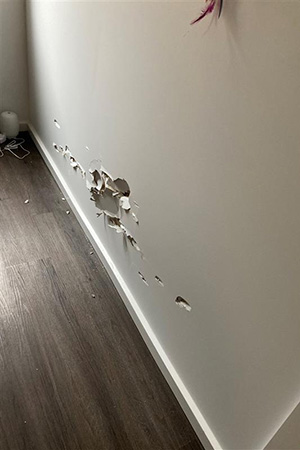
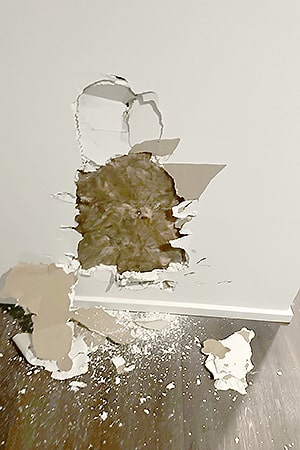
Robust Wall Damage
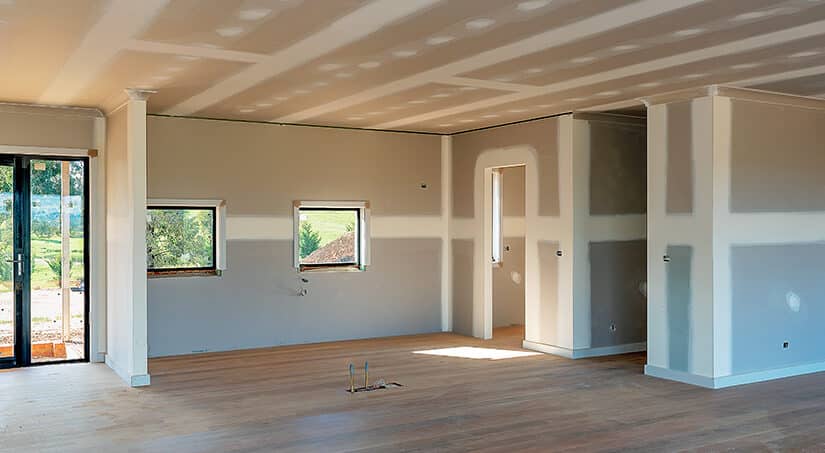
Holes kicked in plasterboard walls that are not suitable for Robust housing.
Robust Wall Damage. The plans say the plasterboard is Impactchek; the question is, where is the mesh that is part of Impactchek? The builder has used standard plasterboard instead.
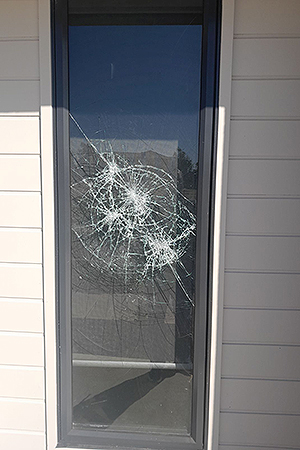
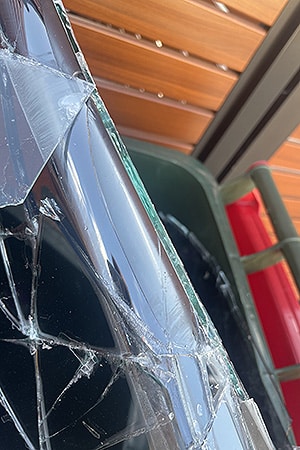
Robust Broken Window, Polycarbonate may be a better solution
Robust Broken Windows. Polycarbonate may be a better solution
Incorrect glazing used on Robust Windows. This is standard glass with a safety film applied. This does not meet the SDA requirements as participants can injure themselves.
Incorrect glazing used on Robust Windows. This is standard glass with a safety film applied. This does not meet the SDA requirements, as participants can injure themselves.
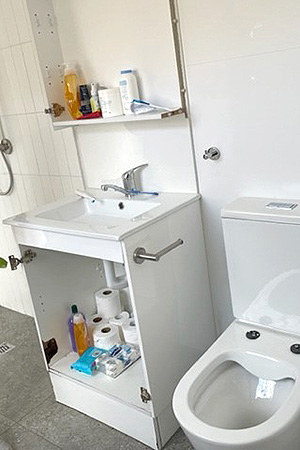
Robust Bathroom Damage including doors ripped off cupboards, toielt seat ripped off and overhead cupboard smashed.
Robust Bathroom Damage: doors ripped off cupboards, toilet seat ripped off, and overhead cupboard smashed.
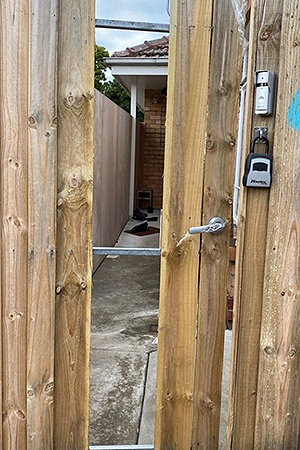
Robust damaged gate as it was not built strong enough.
The gate was severely damaged as it was not built strong enough for Robust Participants.


Impact Resistant Paperface Plasterboard

I believe that impact-resistant paperfaced plasterboard products fall short of meeting the requirements of Robust dwellings as they are easily damaged. In the case of Impactchek, yes, it has a mesh at the back to prevent, say, kicking holes in it; however, as it is plasterboard, the surface and plaster layers can be easily damaged. Additionally, with some participants, if the paper-faced surface is damaged, they will peel this off the sheets very easily, leaving exposed plaster, which will be picked at.


Ongoing Maintenance

When Robust dwellings are not constructed satisfactorily or fail to meet participant requirements, the dwellings are easily damaged. We repeatedly see holes being put in walls by feet, heads and fists or another object in the house, doors ripped off their hinges, standard joinery having doors and drawers destroyed, windows smashed, and plumbing fixtures and fittings replaced.

But who should pay for these repairs?

Is it the participant who made the damage and payment taken from their plan? The SIL caring for the participant, or should it go back on the owner for not providing a dwelling that is fit for purpose? We face this battle daily with the Robust dwellings we are managing.

I would argue that if the dwelling were built to be fit for purpose, damage would be minimal, and maintenance costs would be reduced substantially.


What type of Robust SDA should you Build?

As detailed in the pricing arrangements, the design must cater to at least two participants when developing a house for Robust SDA. In this case, technically, an additional break-out area should also be provided to manage behavioural issues. However, as discussed above, it is highly unlikely that two participants can share a single dwelling due to the inability to live under one roof. This means you will build at least two participants’ homes but only receive 50% of the return the dwelling could earn.

Instead, the only solution that stacks up is constructing individual villas or units designed for a single participant with OOA and fire sprinklers. We would expect suitable sites to accommodate a minimum of two such Robust dwellings.

We have already prepared a blog post on How to Build Robust SDA; however, we do not see these recommendations incorporated into designs resulting in substandard builds.


Comparing the Returns

The following table compares the returns between building a house vs individual units/villas.

These figures are based on developing Robust SDA in south-east Melbourne using the pricing arrangements Version 1.2 (Released 12 July 2023)


Two Resident Robust House

Rate Per Resident $89,421
Potential Earnings $178,842
Expected Return $89,421 (one resident)
Financial Loss $89,421


Three Resident Robust House

Rate Per Resident $65,566
Potential Earnings $196,698
Expected Return $65,566 (one resident)
Financial Loss $131,132


Four Resident Robust Group Home

Rate Per Resident $56,190
Potential Earnings $224,760
Expected Return $56,190 (one resident)
Financial Loss $168,570


Five Resident Robust Group Home

Rate Per Resident $48,294
Potential Earnings $241,470
Expected Return $48,294 (one resident)
Financial Loss $193,176


Returns of Developing Multiple Villas or Units

1 Dwelling $78,343
2 Dwelling $156,686
3 Dwelling $235,029
4 Dwelling $313,372


NOTE: These figures may vary depending on what is approved within a participant’s plan.


Home Modifications Required for Robust Design:

The following list outlines the typical upgrades to Robust SDA dwellings before a participant moves in. The main question, however, is, who pays?

Does the participant pay for the upgrades through their plan, or does the property owner pay for a percentage? If insufficient funding is available within the participant’s plan, the owner will be forced to decide whether to fund some upgrades or lose the participant. Our experience when we explain these options to clients is they will fund some of these additional works to secure a tenant.

The next question for discussion is which items in this list should be a part of a default Robust build instead of an upgrade. In my opinion, they are:

Robust Television Enclosure
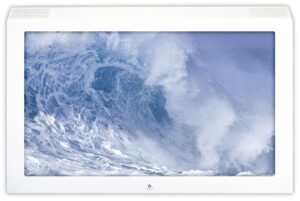
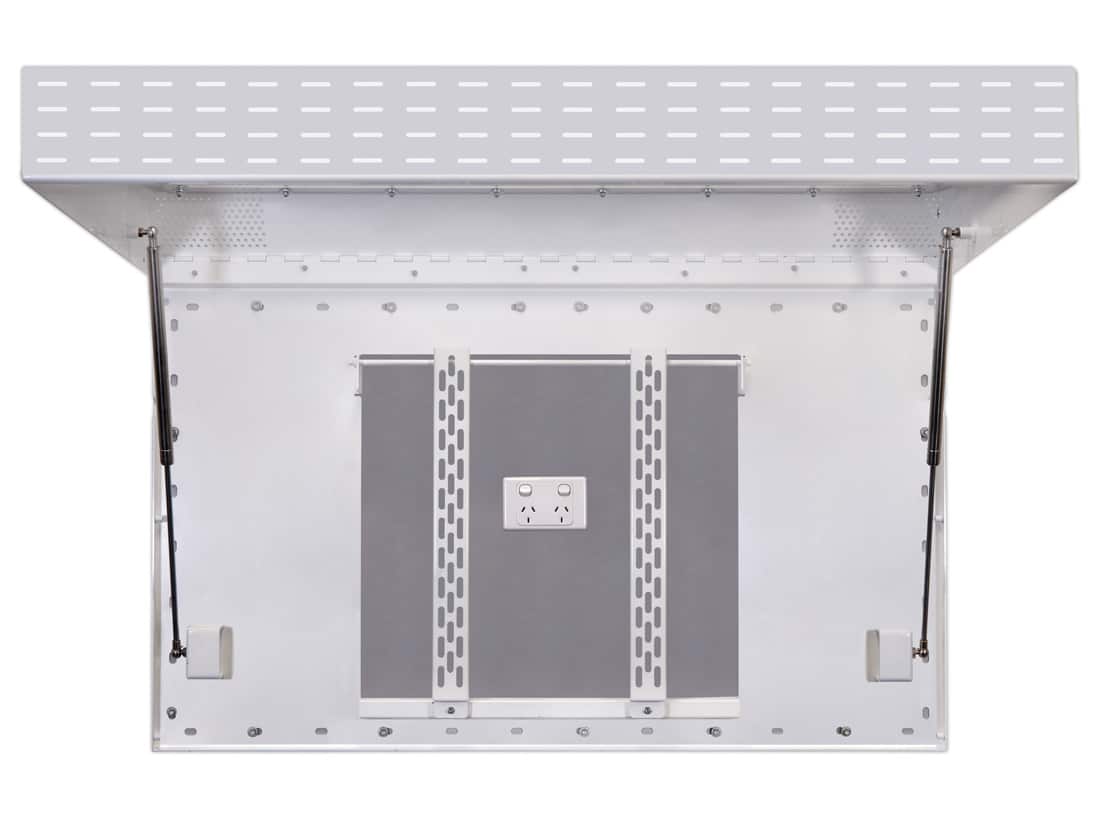
The ultimate solution for protecting your TV in high-risk areas and specialist disability accommodation. Manufactured from 3mm steel and including a 12mm polycarbonate face, this enclosure is built to withstand even the roughest treatment. Available from https://accessandsafety.com.au/product-category/robust-anti-vandal-television-enclosures/Robust-Anti-Vandal-TV-Enclosure-Front-ViewRobust-Anti-Vandal-TV-Enclosure-Anti-Tamper-Fixings

Locks on kitchen cupboards/laundry cupboards
Locks are an easy, low-cost inclusion. Alternatively, enclose the kitchen in its own secured space. Typically, restrictive practices can be applied to these areas successfully to prevent participant injury and reduce risk to staff.

Large rubber door stoppers
Install large rubber door stoppers on all doors. These are low-cost additions; however, they must also be securely fixed to the wall.

Robust door hardware
These are limited types available on the market, and we find the anti-ligature ranges to be the most suitable. This is to prevent damage as opposed to preventing self-harm.

Door Locks
For staff safety, all doors within the home, including external sliding doors and gates. the OOA must be keyed separately,

Anti-vandal plumbing fixtures and fittings
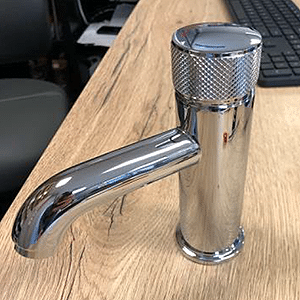
All plumbing fixtures and fittings are to be anti-vandal to prevent damage. Consideration is to be given to a removable hand shower and rail in addition to a rain head in the shower. Replace towel rails with 32mm OD grabrails that are securely fixed to walls.

Robust tap example supplied by Paco Jaanson


Manhole
Relocate the manhole to the OOA room. Typically, these are installed within the laundry or passageways accessible by a participant, as we would not expect restrictive practices to be satisfactorily applied to these areas.

Bladed ceiling fans
Remove all surface-mounted bladed ceiling fans from the home if provided, as participants will pull them down.

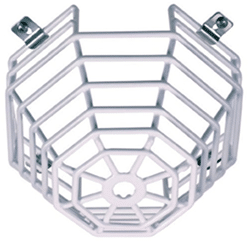
Anti-vandal wire guards
Install anti-vandal wire guards around all internal fittings, including downlights, smoke alarms, thermal detectors, fire sprinklers, and thermostats. We recommend fire sprinklers be recessed within the ceiling to reduce the risk of intentional activation.

Anti-vandal wire guardsAnti-vandal external enclosures
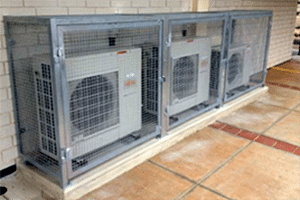
Install to air-conditioning and hot water systems concrete pad/plinth and securely lockable cages manufactured from hot-dipped galvanised mesh, including posts and gate frames with vandal-proof hinges to prevent the participant from damaging the equipment. It is preferred that air conditioning condensers be roof-mounted.

Anti-vandal steel enclosures

Lights and GPO’s
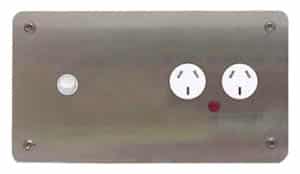
All light switches and GPOs to be replaced with vandal-resistant metal plate switches. Forget about the requirement within the SDA design standard that requires switches to have a minimum width of 35mm. These types of switches are unsatisfactory and easily broken, increasing the risk of electrocution of participants.

Anti-Vandal GPO & Light Switch

Replace door frames
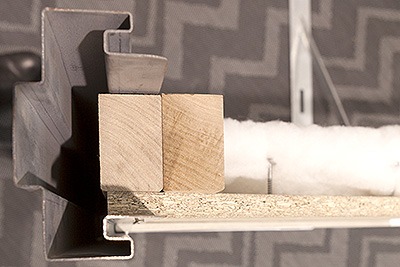
Participants can easily pull the heavy solid core doors off timber door frames. in such cases, steel door frames may have to be retrofitted

SDA Robust Wall Construction 2

Keyed isolation switch
Replace the oven and hotplate isolation switch with a keyed switch to prevent the participants from turning them on and burning themselves or starting a fire. Note this is considered a restrictive practice.

Mirrors
Replace bathroom and bedroom glass mirrors if provided with shatter-resistant polycarbonate or stainless steel mirrors.

Fence extensions
Install 600mm high fence extensions around the property boundary. The fence extensions serve two purposes: the first is to reduce the risk of participants absconding, and the second is to reduce noise to neighbours. Installing fence extensions can be problematic in new subdivisions with fence height restrictions.

Motorised Privacy Screens
Install motorised privacy screens to windows where required by the SIL provider. These are provided as internal curtains, and blinds will be ripped down by the participant, leaving no way to control light levels. They also reduce noise level transfer to neighbours, especially at night.

Landscaping
Remove items in the yard that could be used as projectiles or weapons that could cause damage to the house or injure a support carer; this includes pavers, rocks, stones, garden edging, etc.


Participants with Extreme Behaviour

Security door
Where required by the SIL provider, install a security door outside OOA office/bedroom door. A security door is generally only required for participants with extreme behavioural issues. The security door provides a safe barrier to support workers.

Convex mirrors
Install convex mirrors in all locations where there are no clear lines of site and to view around corners to maintain safety for staff.


Additional Resources

The Stupidity of Hybrid Design SDA

You cannot certify Hybrid SDA with Robust and High Physical Support or Fully Accessible for the same dwelling

What is a Hybrid SDA?

A Hybrid SDA house design can be used for all of the four categories, including Robust (RO), Improved Liveability (IL), Fully Accessible (FA) and High Physical Support (HPS). These are then marketed to the gullible or those who have not undertaken sufficient due diligence, leading to sales to the developer. Along with the sale, false promises are usually made about participant demand and expected returns on many occasions.

Since the inception of SDA, I have read articles and listened to podcasts where I keep hearing about the concept of ‘Hybrid Design’ for SDA, which includes Robust SDA, which I consider among the most ridiculous ideas for delivery.


Hybrid Design SDA without Robust

However, I believe a hybrid design for HPS, FA, and IL is a good approach and something we have already recommended to our clients. It provides a high level of flexibility for SIL providers. For example, someone may have a degenerative disease such as MS when they move in as an IL participant. Then, as their condition gets worse and they need FA and then eventually HPS accommodation, they can stay in the same home.


Backward and Cross Compatibility

The key part of hybrid design and part of the spin is backward and cross-compatibility of designs, i.e., if you build RO, you can also use it for IL. Or if you build HPS, you can also use it for FA, IL, and, in some cases, RO. This, however, is not correct nor as easy as it sounds.


HPS to FA

HPS to FA are generally backward compatible, as long as a peninsula toilet has not been provided within the bathrooms as detailed in the design standards, figure 8(e). This type of toilet pan is not compliant with FA.


HPS to FA & IL

Either HPS or FA to IL generally creates issues that are regularly overlooked. Unless the ‘Luminance Contrast’ requirements of the design standards part 19 Luminance Contrast Requirements.

This section calls up additional elements that cater for those with low vision or those who are blind that apply to IL SDAs only, including:

  • Luminance contrast to doors,
  • Solid (and non-translucent) contrasting glazing strips to glazing,
  • The toilet seat shall have a minimum luminance contrast of 30% with the background and
  • Colour contrast shall be provided between floor surfaces and wall surfaces.
  • Solid (and non-translucent) contrasting glazing strip of 75mm width to any glazed area which could be mistaken for an opening.

These requirements are rarely applied to HPS and FA dwellings, necessitating upgrades and recertification. Even if they were applied, recertification for a change of category would be required.


RO and IL

Whilst spatially, there is no difference between an RO and IL build, each category has its own unique prescriptive requirements, which add to the construction cost.

For an RO build, the following are some of the additional costs incurred:

  • Impact-resistant wall linings.
  • Solid core doors.
  • Vandal-resistant door hardware.
  • Laminated glass or polycarbonate resin thermoplastic material to windows.
  • Vandal-resistant door hardware.
  • Heavy-duty joinery.
  • Sound insulation to bedrooms.
  • Additional egress doors for staff safety.

As detailed above, the luminance contrast requirements also apply for an IL build, which is rarely considered in an RO build.


What About Robust Compatibility with HPS, FA and IL?

Before we discuss the unique parts of building design for Robust, it is critical to have an understanding of what a typical Robust participant is.


Profile of a Robust Participant

The term “robust” is used to describe participants who have complex needs and require a more comprehensive support plan. A Robust participant may have an intellectual (including autism, down syndrome, acquired brain injury, pica and Prader-Willi syndrome), psychosocial disability or other behaviours of concern that prevent them from safely living with other people.


What is Psychosocial

“Psychosocial disability is a term more commonly used to describe a disability that may arise from a mental health issue.” (NDIS)

Psychosocial disability is not about a diagnosis, it is about the functional impact and barriers which may be faced by someone living with a mental health condition. A psychosocial disability arises when someone with a mental health condition interacts with a social environment that presents barriers to their equality with others.

Psychosocial disability may restrict a person’s ability to:

  • be in certain types of environments
  • concentrate
  • have enough stamina to complete tasks
  • cope with time pressures and multiple tasks
  • interact with others
  • understand constructive feedback
  • manage stress.

Someone with a psychosocial disability may require support to overcome the barriers to social inclusion they face.

Past experiences of trauma are common for people with psychosocial disability. It is important to be sensitive to the possible impacts of trauma, which may be lifelong when providing support.


Requirements of a Robust House

We have previously blogged about building Robust SDAs to demonstrate that the design must use resilient but inconspicuous materials to reduce the risk of injury, minimise neighbourhood disturbances and cope with heavy use. This includes secure windows, doors and external areas, high-impact wall lining, fittings and fixtures such as blinds and door handles, soundproofing, and laminated glass.

The design should also include adequate space and safeguards to support the needs of residents with complex behaviours and provide areas for retreat for other residents and staff to avoid harm.


Additional Costs for a Robust Build

The following are some of the key areas of additional cost to build a Robust dwelling:

  • Impact-resistant wall linings.
  • Solid core doors.
  • Vandal-resistant door hardware.
  • Laminated glass or polycarbonate resin thermoplastic material to windows.
  • Vandal-resistant door hardware.
  • Heavy-duty joinery.
  • Sound insulation to bedrooms.
  • Additional egress doors for staff safety.

The link above, ‘Why Robust SDA is Failing Participants, Carers and Investors, ’ also details additional costs usually incurred by both the participant and owner when someone moves in.
 

Robust Participants

While designing Robust Specialist Disability Accommodation (SDA) houses, the SDA Pricing Arrangements state that a house must cater to at least two participants.

However, some designs cater to up to five participants plus OOA (onsite overnight assistance). The issue is that in most cases, Robust participants cannot share a home with anyone else due to their behavioural issues, and segregating parts of a dwelling between participants is not permitted except for areas like a kitchen due to the restrictive practice requirements. There are some very rare cases where participants share that they have grown up together; however, we could comfortably say 99% of dwellings are single-occupant.

This means any house built for Robust will, at best, have a 50% occupancy at any time if it has been built for two participants plus OOA remembering a Robust participant cannot share with any other category.


So Why?

Why would you build a house for use as HPS, FA and IL then include the additional provisions for Robust SDA that will only ever have one participant living in it at any time? What is the point of developing a hybrid design that includes Robust?

If you build a three-bedroom for HPS, why would you add a significant cost premium to include all the Robust elements such as wall linings, solid core doors, and toughened glass when the best return you will likely get will be based on one participant? It makes no sense and wastes investors’ money.


Additional Resources

NDIA IL Confirmation

Introducing the Turtle Tough TV enclosure—the perfect protection for your TV in Robust Specialist Disability Accommodation

When it comes to safety and style, you can’t beat our Turtle Tough TV enclosure. It’s durable, has a modern design and reduces the risk of injury for high-risk areas, including Robust Specialist Disability Accommodation.

Robust Anti-Vandal TV Enclosure Showing Gas Struts and Mountings


What is the Tough Turtle TV enclosure?

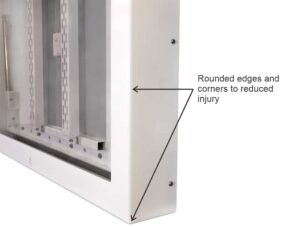
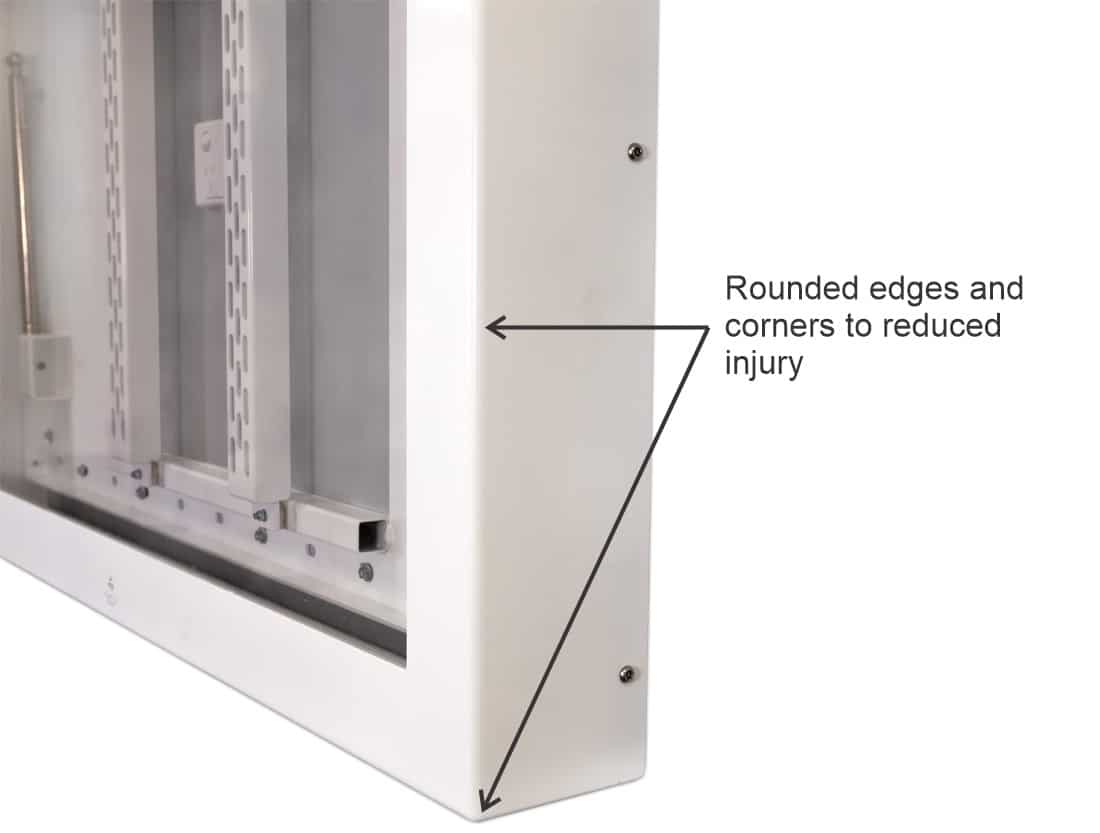
Made from 3mm steel with an unbreakable 12mm polycarbonate screen, the Tough Turtle TV enclosure is built to last. It’s the perfect way to protect your TV, suitable for indoor and outdoor spaces. With built-in ventilation, gas struts for easy lifting, handy mounting brackets, anti-tamper screws and, all corners and edges are rounded so you can rest easy knowing your TV and the people around you are safe. Best of all, you won’t even see this enclosure is specifically made for robust spaces with its sleek design and aesthetically pleasing powder-coated white finish.


Why do I need a TV enclosure for robust spaces?

In a lot of specialist disability accommodation and healthcare settings, furniture and appliances need to be solid and durable. Having a TV enclosure reduces risk of injury and electrocution, making it safer for participants and the community—which is particularly important in high-risk or Robust SDA settings. It also protects the TV, increasing its working life and saving money on maintenance, repairs and replacement. This is particularly important in spaces where emotions might run high, or people might experience complex or violent behaviours.

Robust Anti-Vandal TV Enclosure Anti-Tamper Fixings


Who might benefit from a robust TV enclosure?

There are a lot of settings where a robust TV enclosure like the Turtle Tough would be beneficial—especially for anyone living or working in high-risk areas and spaces where people may have high support needs, complex or violent behaviours, or struggle with self-harm and emotional regulation. This might include spaces where people are receiving treatment for their health or mental health, as well as Specialist Disability Accommodation and people released from the judicial system.

It can be hard to cope with emotions, especially in an unfamiliar setting where it may be challenging to self-soothe—or if someone is dealing with a difficult situation or sensory issues. People may also feel frustrated or lash out if they cannot properly communicate with those around them or express their needs.

Not only does the Tough Turtle TV enclosure protect your TV and those around you—it can also be an important emotional regulation tool. Sitting back, relaxing and watching TV safely can have significant therapeutic benefits.


Want to know more?

We’re here to help. Check out our website,  or contact us on 1300 994 890 to get in touch today for more information.

Visit the Turtle Tough Robust TV enclosures webpage.

How much money will I earn investing in SDA Specialist Disability Accommodation?

What Financial Returns Should I Expect with SDA

One of the most asked questions from people wanting to invest in SDA or Specialist Disability Accommodation is, ‘How much money will I make? I have heard it is a lot”. This is followed by, “I heard the payments are Government guaranteed,” and then “Where should I build an SDA?”

All three questions miss the point of providing SDA that is Desirable™️ to participants.


Where Should I Build SDA

This is one question we will not answer. It is not a case of building SDA; participants will queue up to move in. It is now becoming a competition for the best and most desirable SDA to attract participants.

  • Is it near community facilities, retail, and medical, or is it located in an area that was once a cow paddock a couple of years ago?
  • Is there public transport available?
  • How many people will be expected to live in the dwelling, 1, 2, 3, 4 or 5?
  • Will each participant have an en-suite?
  • Will the dwelling meet the minimum SDA requirements, or does it go well above?
    • Height adjustable kitchen benches and cupboards
    • Height adjustable bathroom basin/ vanity
    • Full home automation
    • Hoist system (HPS) between bedroom & bathroom
    • Does it feel warm and welcoming?
    • Is there an al-fresco area for socialising, BBQs etc?


Demand


If you build SDA, will yyou get participants to move in


  • However, the most crucial question is, “Is there a demand for SDA in this location? We are already seeing pockets around Australia where there is an oversupply of SDA whilst other areas are screaming out of SDA.


Demand Analysis

We are not experts in demand analysis. SDA Consulting’s expertise includes design advice, SDA certification, and registration. We are also specialist SDA Property Managers. However, we stress this is the most critical step in developing SDA and must be undertaken before putting pen to paper.


Participant Demand

Closely aligned with finding participants for sub-standard SDAs is the number of participants you will successfully attract. Some examples are:

  • Building a two, three or even a four-bedroom Robust SDA. From experience managing a significant number of Robust dwellings, we know that it is most likely only one participant will be able to be accommodated due to behavioural issues, including triggering, aggression and violence, as well as damaging behaviour. This means you will have empty bedrooms that cannot be used or claimed for payments. I just searched and was shocked to see companies still spruiking two participants Robust with 15%+ returns – Good Luck!!!
  • Building a two-, three- or even four-bedroom HPS/FA dwelling where participants are expected to share a bathroom. Would you want to share a bathroom with a stranger? But hey, for three participants sharing one bathroom, you will earn an amazing 15%+ return – Again, Good Luck!!!
  • How about a three-participant home, each with its own bathrooms but only one living/family space? So, as a participant, you can stay in your bedroom or go out to a single space where the TV and other participants will be. What if you want to chill, read a book, or catch up with family and friends but have nowhere to go? Do people understand how big a motorised wheelchair is, typically used by HPS participants? But hey, you will get a 20%+ return, dare I say again, Good Luck!!!


No Participants = No Money


Government Guaranteed Payments For SDA

Answering the second question next, the answer is No, it is not government guaranteed, which is followed up with, “but we have been told by other builders, developers, and investment advisors it is. So, to set the record straight, It is not. You will only receive payments if someone is enrolled to live in your SDA. No people = no money.

Participants will not want to move into the dwelling if your house is not well-designed, spacious, welcoming and desirable. Too often, we see cheaply built SDAs, badly designed and poorly finished in unsuitable locations where we cannot find participants.


How Easy Is It To Find SDA Participants?

Finding participants and enrolling them in an SDA can take anywhere from two months to twelve months or more for low-demand or over-developed areas.

This is not a simple process as with standard rental houses; it is far more complex, especially considering the number of parties involved, including guardians, parents, allied health representatives, etc.

The following is an example of a phone call our property managers receive from people who invested in SDA and have not done their due diligence and understand how an SDA is delivered.


So my house will be finished in two weeks. Can you organise participants to move in then?


The SDA HOUSING Podcast


Karina Ces (Director in charge of property management) and Nicole Matejka (Senior SDA Property Manager) with SDA Consulting were interviewed twice by Debbie from SDA Housing. They discussed all aspects of SDA property management, from enrolling and managing properties through to sourcing participants.


EPISODE 171 – SDA CONSULTING GROUP: Property Management (1/2)

In this initial episode, Debbie is joined by Karina and Nicole from SDA Consulting Australia. Karina and Nicole discuss the roles of an SDA Provider as a Disability Property Manager. Nicole is a property manager with over 18 years of experience, so she looks at the process very much from the property management perspective.

They discuss the modifications and additional requirements needed by individual participants over and above the standard provisions in the property. Many of these modifications may need to be paid for by the property owner, particularly if they wish to secure a particular participant as a tenant; however, some additions are funded by the SILs or can be funded through the participant’s plan.

They discuss the fact that all SDA-funded participants have to fit into one of 4 broad SDA categories, and given the vastly different needs and requirements each individual will have, it is understandable that additional modifications might be needed to ensure the home is suitable for the participant’s needs.

The ladies also discuss the SDA property certification and enrollment process to ensure a property is registered with the NDIA and is ready to be tenanted by NDIS Participants, as well as the sourcing of participants and the various stakeholders involved in assessing the home for suitability and any modifications required, along with participant matching for multi-tenant homes. The potential vs. actual incomes a property owner may receive are discussed regarding the funding a participant has as opposed to the funding level the dwelling has been enrolled for.

The challenges for everyone involved are covered from funding levels, expectations of income by owners, separation of supports and communication between the various stakeholders. Karina and Nicole finish by explaining the fantastic difference to a participant’s life that moving into an SDA home can result in – which, at the end of the day, is the primary reason for Specialist Disability Accommodation.

Listen to Episode 171 Here 


Episode 188 – SDA CONSULTING GROUP – Property Management (2/2)

As a follow-up to Episode 171, this is Part 2 of 2 with Karina and Nicole from SDA Consulting Group. Technically, it is Part 3 of 3 if you include Episode 160 with Bruce Bromley 🙂

This episode has Debbie sitting down for another chat with Karina & Nicole to discuss in more detail the role of an SDA Provider and SDA Property Manager when wearing both hats. There seems to be a lack of “property management” experience in the SDA provider space across this industry, and we thought it would be worth the effort to delve into greater detail about the subtle differences compared with other SDA providers. The process of enrolling a property as an SDA dwelling and how Participants are sourced are discussed. The intricacies of the different types of dwellings, locations and participant funding are highlighted as reasons why it may take longer to tenant some properties.

The ladies also discuss what they offer to the industry as licenced property managers in addition to SDA providers and how many different stakeholders are involved behind the scenes when it comes to looking after properties, ensuring it’s set up and ready for the tenants and that all the paperwork has been looked after and is in place. As always, we are ever grateful for the support from industry experts like that seen with the SDA CONSULTING GROUP, and we value their contributions in trying to “do good” for all stakeholders.

Listen to Episode 188 Here 


How to Calculate the Payment amount for providing SDA


Now, to answer the first question on investment returns, this is a reasonably simple process.


  • Secondly, download the NDIS SDA Price Calculator Excel file on the same page.


Calculator

NDIS SDA Price Calculator

The calculator has multiple fields that need to be selected. Thankfully, they are mostly self-explanatory except for the  Location Factor SA4.


What is Location SA4?

Statistical area level 4 (SA4) is one of the spatial units defined under the Australian Statistical Geography Standard (ASGS). The ASGS is a hierarchical geographical classification defined by the Australian Bureau of Statistics (ABS), which is used in the collection and dissemination of official statistics. The ASGS provides a common framework of statistical geography and thereby enables the production of statistics that are comparable and can be spatially integrated.


How do I work out my location within the calculator as required?

To determine your location for the location factor as required within the calculator, follow these steps:


  • Then, enter the address of the property you are considering and click search.
  • The search result map will be displayed.
  • Click near your property, and a window will appear below.


Obtaining SDA SA4 Location


  • Beside Name: is the SA 4 Location name you must select in the calculator. In this example, it is ‘Melbourne – South East’.
  • This is what you need to select from the Location drop-down box.


SA4 Melbourne - South East


The calculator will now automatically calculate the expected return. Note this is the best-case scenario, and it is not always the case of what a participant has qualified for. Also, investigate the returns for Fully Accessible and Improved Liveability, as these participants may be all that will be available when the development is complete.

Again, there is no government guarantee that these amounts will be received.


Property Management

Need advice? Please get in touch with Us about the Property Management of SDA,

Why the SIL, STA, MTA or SDA Accommodation you’re Providing may be Operating Illegally

Have you confirmed before trading within your SIL, STA, SDA or MTA house that it has the correct building classification? Is it a Class 1a, Class 1b, Class 2 or Class 3?

All approved dwellings will have an occupancy permit (OP), which will state the approved use of that dwelling in the form of a classification.

If the building classification is Class 1a, It may not be fit for purpose.

We have often been asked to manage SIL, STA or MTA properties with an OP for Class 1a, which we decline.

It is not a simple case of renting a standard house and starting a STA, MTA or SIL business. The same applies to incorrectly classified SDAs.


Classifications for Housing

The Building Code of Australia categorises types of buildings by their use. As an example

  • Class 1a are houses, villas or townhouses
  • Class 1b is a boarding house, guest house, hostel or the like
  • Class 3 is a residential building providing long-term or transient accommodation for a number of unrelated persons, such as:
    • Boarding house, guest house, hostel, lodging house, backpacker accommodation,
    • Accommodation for the aged, children, or people with disability
    • A residential care building.
  • There are further classifications for commercial and industrial buildings.

Should an individual or organisation operate a business from a building that does not have the correct Class, it will be seen as being used illegally.

This is important because each category has prescriptive requirements, especially around life safety and emergency evacuation.


Should SIL, STA, MTA or SDA be operating within Class 1a, Class 1b or Class 3 Dwelling?


Class 1a Buildings

A Class 1a house is typically used for a single occupant of a related family.


Class 1b Buildings

Class 1b buildings can be a boarding house, guest house or hostel that has a floor area less than 300 m2 and ordinarily has less than 12 people living in it. It can also be 4 or more single dwellings located on one allotment which are used for short-term holiday accommodation.

A Class 1b building can be defined as one with a total floor area of less than 300 m2 (measured over the enclosed or outer wall of the whole Class 1b building) and where not more than 12 people would ordinarily be resident. Any accommodation larger than this would usually be defined as a Class 3 building, such as a hotel, motel, backpackers etc.

The Class 1b classification can attract concessions applicable to Class 3 buildings. These concessions allow people to rent out rooms in a house or run a bed and breakfast without complying with the more stringent Class 3 requirements. The reasoning is that the smaller size of the building and its lower number of occupants represent reduced fire risks.

Apart from their use, the primary difference between Class 1a and Class 1b buildings is that the latter requires a greater number of smoke alarms and, in some circumstances, access and features for people with a disability.

NOTE: SIL, STA & MTA typically require the signing of a lease agreement.


Class 3 Buildings

A Class 3 building is a residential building providing long-term or transient accommodation for a number of unrelated persons.

Class 3 buildings, when applied to NDIS accommodation, could include the following:

  1. A boarding house, guest house, hostel, lodging house or backpacker accommodation.
  2. Accommodation for the aged, children, or people with disability.
  3. A residential care building. See details below.
 

Class 3 buildings provide accommodation for unrelated people. The length of stay is unimportant.

Some exceptions to this classification include certain bed and breakfast accommodations, boarding houses, guest houses, hostels, lodging houses and the like, which fall within the concession provided for Class 1b buildings.

Class 3 buildings include a building that houses elderly people or other people who require special care (in some States or Territories, it is not acceptable for a Class 1b building to be used to house elderly people or other people who require special care – it is recommended the local building regulatory body be consulted)


Residential Care Building

A Class 3, 9a or 9c building which is a place of residence where 10% or more of persons who reside there need physical assistance in conducting their daily activities and to evacuate the building during an emergency (including any aged care building or residential aged care building) but does not include a hospital.

I have previously blogged on the topic of Fire and Life Safety of Specialist Disability Accommodation, which also addresses the correct classification of SDA, www.sdaconsulting.com.au/failures-of-sda-and-fire-safety

The occupants of SIL, STA and MTA are no different to participants within Specialist Disability Accommodation (SDA) and the definition of a Residential Care Building is very clear, “where 10% or more of occupants need physical assistance in conducting their daily activities and to evacuate the building during an emergency.

It is reasonable to state that 100% of SIL, STA and MTA participants meet that definition as that is the purpose of that type of accommodation.


Life Safety and Disability Access Requirements

The following are the requirements for Class 1 and Class 3 homes, including life safety and disability access provisions. We have intentionally excluded the fire separation requirements.


Class 1a Buildings

Smoke Alarms

In a Class 1a building, smoke alarms must be located in—

  1. any storey containing bedrooms, every corridor or hallway associated with a bedroom, or if there is no corridor or hallway, in an area between the bedrooms and the remainder of the building; and
  2. each other storey not containing bedrooms.


Accessibility Provisions

Nil (Some states have LHA provisions, but we do not consider these accessible).


Class 1b Buildings

Smoke Alarms

In a Class 1b building, smoke alarms must be located in—

  1. every bedroom; and
  2. every corridor or hallway associated with a bedroom, or if there is no corridor or hallway, in an area between the bedrooms and the remainder of the building; and
  3. each other storey.


Lighting to assist evacuation

In a Class 1b building, a system of lighting must be installed to assist evacuation of occupants in the event of a fire, and—

  1. be activated by the smoke alarm required by 9.5.3(b); and
  2. consist of—
    1. a light incorporated within the smoke alarm; or
    2. the lighting located in the corridor, hallway or area served by the smoke alarm.


Accessibility Provisions

Access requirements for a Class 1b building are as follows:

  1. A boarding house, bed and breakfast, guest house, hostel or the like, other than those described in (a) — to and within—
    1. 1 bedroom and associated sanitary facilities; and
    2. not less than 1 of each type of room or space for use in common by the residents or guests, including a cooking facility, sauna, gymnasium, swimming pool, laundry, games room, eating area, or the like; and
    3. rooms or spaces for use in common by all residents on a floor to which access by way of a ramp complying with AS 1428.1 or a passenger lift is provided.

Accessibility is to meet the requirements of AS1428.1.


Class 3 Buildings

Life Safety Equipment

  1. The provision of equipment for Class 3 residences is complex and the following is an example of some of the requirements that typically need fire-engineered.
    1. Smoke alarm system
    2. Smoke detection system
    3. Smoke alarm system
    4. Building occupant warning system
    5. Fire sprinklers
    6. Fire hose reels
    7. Fire extinguishers
    8. Fire sprinklers
    9. fire alarm monitoring system connected to a fire station or fire station dispatch centre
    10. Self-closing doors


Accessibility Provisions

Access requirements for a Class 3 building are as follows:

  1. For a Class 3 building, access requirements are as follows:
    1. Common areas:
      1. From a pedestrian entrance is required to be accessible to at least 1 floor containing sole-occupancy units and to the entrance doorway of each sole-occupancy unit located on that level.
      2. To and within not less than 1 of each type of room or space for use in common by the residents, including a cooking facility, sauna, gymnasium, swimming pool, common laundry, games room, TV room, individual
        shop, dining room, public viewing area, ticket purchasing service, lunch room, lounge room, or the like.
      3. Where a ramp complying with AS 1428.1 or a passenger lift is installed—
        1. to the entrance doorway of each sole-occupancy unit; and
        2. to and within rooms or spaces for use in common by the residents.
      4. The requirements of 3. only apply where the space referred to in 3:1 and 3:2 is located on the levels served by the lift or ramp.
    2. To and within sole-occupancy units — in accordance with Table D4D2b.

Table D4D2b: Requirements for access for people with a disability – sole occupancy units require one required accessible sole-occupancy unit to be provided and meet the requirements of AS1428.1.


Implications of Operating Illegally

Operating an SIL, STA, MTA and even SDA within a building with the incorrect classification will make operators liable should any issues arise that your insurance potentially covers. These could be slips, trips, falls, fires resulting in emergency evacuation, injury, or even multiple deaths.

Additionally, as we have seen with student accommodation operating in class 1a dwellings, councils regularly undertake crack-downs to identify inappropriate use of buildings within communities. These generally result in building notices or building orders being issued with instructions to undertake immediate safety works whilst obtaining a permit for the buildings’ correct use.
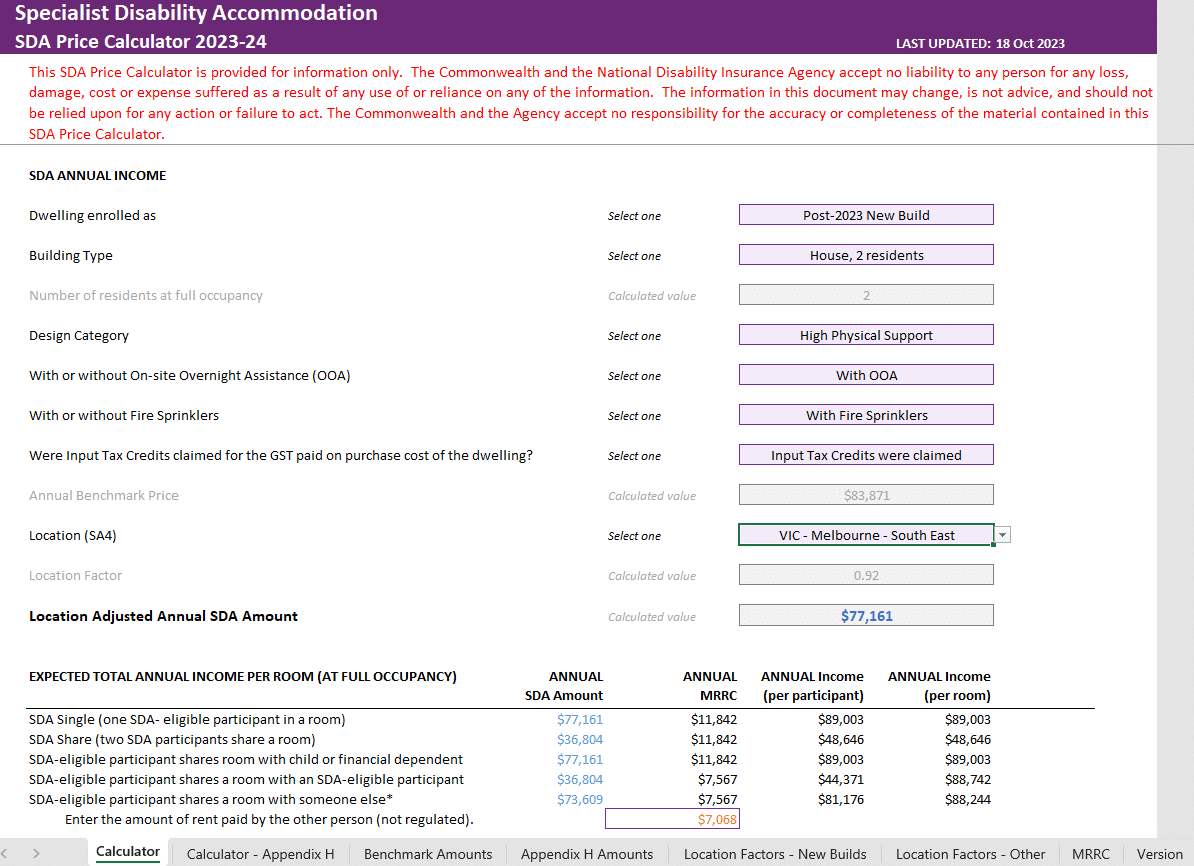
We recommend that all operators speak directly with your local councils and request the building occupancy details, including its classification, then seek professional advice from a registered building surveyor.
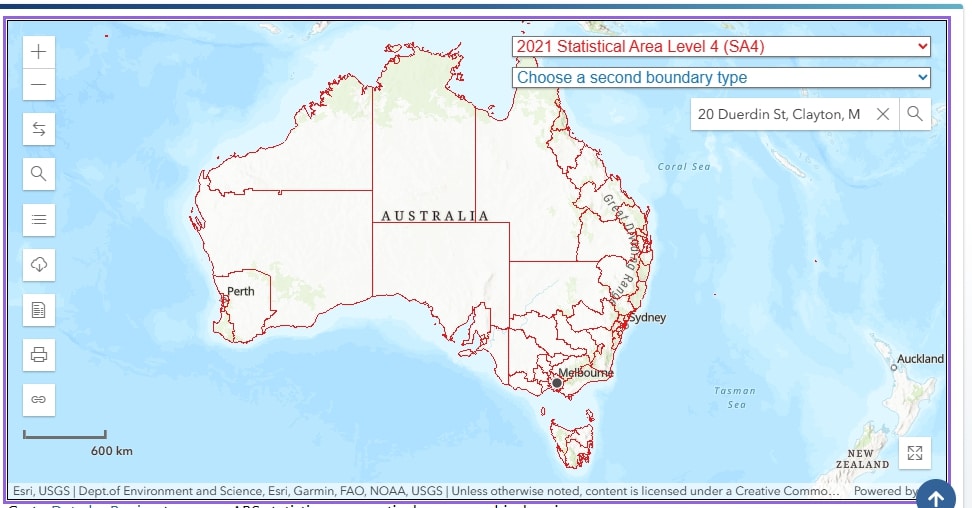
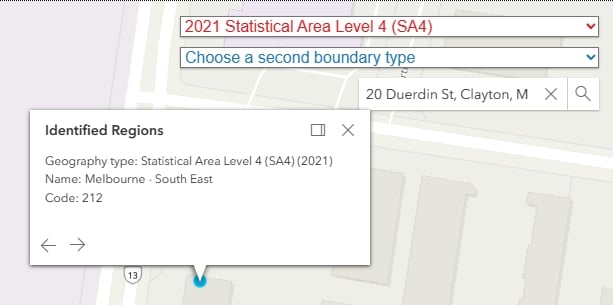
 

Examples of an Occupancy Permit

Extract from a redacted occupancy permit


Periodic Inspections – Essential Safety Measures

One critical element that is also included within an occupancy certificate is that they detail when mandatory periodic inspections must be undertaken for elements such as (varies by state):

  • exit doors
  • early warning systems
  • emergency lifts
  • emergency lighting
  • emergency power supply
  • emergency warning systems
  • exit signs
  • fire extinguishers
  • fire detection and alarm systems
  • fire hydrants
  • fire isolated stairs
  • fire rated materials
  • paths of travel to exits
  • smoke alarms
  • smoke control systems
  • sprinkler systems.

Acquiring a copy of the occupancy certificate is essential so these inspections can be scheduled. Failing to undertake these inspections will lead to serious prosecution.

The building owner is also responsible for ensuring the use of the building is not unlawful. They must also prepare an annual ESM (Essential Safety Measures) report on the building’s essential safety measures. You may authorise an agent, such as a specialist maintenance contractor, to complete the report. The annual essential safety measures report needs to be in accordance with the approved form.

An example of an ESM schedule has been provided at the end of this post.


ESMs act as a first line of defence in the event of a fire

Essential Safety Measures (ESMs) are safety features required for a building to protect occupants in case of a fire. Non-compliance with ESMs not only puts occupants at risk but also passers-by and adjoining buildings.

Maintained ESMs can give occupants more time to exit the building and lessen the chance of spreading fire. The maintenance of ESMs and keeping exits and pathways clear are the owners’ responsibility.

Owners need to make sure that ESM maintenance and inspection (including repairs) are carried out and that records are made available. If they are not, owners could be fined.


Essential safety measure responsibilities

  • Councils have responsibility for the enforcement of building safety within their municipality.
  • The municipal building surveyor or chief officer of the relevant fire authority is responsible for enforcing the maintenance provisions of the Regulations.
  • Building occupiers have an obligation to ensure all exits and paths of travel to exits are kept readily accessible, functional and clear of obstructions.
  • Building owners must ensure that an essential safety measure is maintained so that it operates satisfactorily.


Consequences of failing to comply

Non-compliance may result in an infringement notice issued by the Council or the Fire Authority, along with a fine. In Victoria, fines can amount to over $35,000 for an individual and over $245,000 for companies prosecuted. Other states have similar penalties.

It may also result in prosecution and more substantial fines. More importantly, non-compliance could put building occupants at risk.


Example of an ESM Schedule

Example of a Schedule for Essential Safety Measure for NDIS Housing

Newsletter

Keep up with Specialist Disability Accommodation standards using our free e-newsletter. Save yourself the headache of complaints and expensive last-minute upgrades. Sign up here!