
The Critical Role Occupational Therapists Play in SDA

Enabling Independence Through Good Design

Working with an Occupational Therapist during the design phase of new Specialist Disability Accommodation (SDA) will ensure optimal outcomes for residents with complex disabilities.  While identifying the individual needs of residents with complex disabilities is a specialist skill and needs to be addressed through a formal assessment from an Occupational Therapist, it is evident that as we start to consider the needs of an individual and how their environment can either facilitate or hinder independence, the importance of both health and design professionals working collaboratively with residents to achieve successful outcomes and design quality homes has never been more critical.

As part of the planning process NDIS participants who qualify for SDA are required to provide a statement of goals, objectives and aspirations they wish to pursue within an environmental and personal context.  Like us all, participants goals will vary greatly.  For people some participating in meal preparation may be important, for others it may be about maintaining a current level of independence, or increasing independence with personal care tasks. Whatever the participant’s goals, it’s important that homes are designed to facilitate the achievement of goals and enable participation in activities that are meaningful and important to residents.  This means SDA needs to provide housing solutions that support an individual’s complex needs. In other words, resident’s individual needs must be driving design.
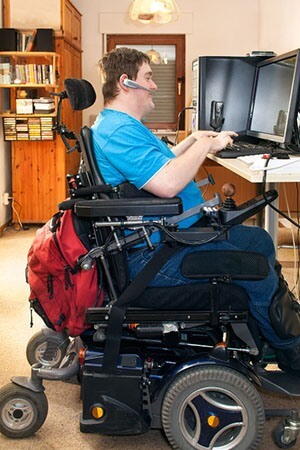
Occupational Therapist designed home modifications

When designing a space to meet the needs of a particular person the relationship between the person, their environment and the activities they undertake, or wish to undertake within their environment must be considered holistically. For example, where a participant identifies one of their goals is to increase their level of involvement in meal preparation a number of factors in relation to the individual’s needs must be considered that will have a direct impact on the design of the kitchen. Such considerations may include suitable heights for joinery and clearances under workspaces to accommodate the person, including provisions for any aids they may use, or whether the resident’s reach range, endurance or cognitive function will impact on the layout of fixtures, fittings and storage facilities. Other considerations may include how the choice of door and tap hardware will impact on the resident’s ability to use and operate independently.

At Equal Access we have Registered Occupational Therapists who are also qualified Access Consultants who understand the complex relationship between people with disabilities and how their needs and level of function can impact the requirements of their environment. Our OT’s work collaboratively with the resident, building designers and building surveyors to ensure that homes are designed to meet the individual needs of residents while also ensuring compliance with all relevant statutory and legislative requirements.  We provide expert advice and deliver viable solutions which ensure a customised framework is established early on, avoiding the need for expensive and time-consuming retrofit down the track.  If you would like any more information regarding our services or would like to discuss a specific project, feel free to get in touch.
Why your SDA might be a Class 3 and not a Class 1a or 1b

Specialist Disability Accommodation (SDA) is setting new standards within the building industry, paving the way for the development of homes rather than institutions for people with a disability. However, this has created some ambiguity over when a home registered as an SDA no longer fits the model of a ‘Typical home’ under the Building Code of Australia.

The Building Code of Australia (BCA) is a technical building document adopted Australia wide which categorises how a building use shall be designed/constructed to safeguard health, safety and amenity of all occupants.

These uses are defined as ‘Building Classifications’ and include;


Class 1aa single dwelling being —

  1. A detached house; or
  2. One of a group of two or more attached dwellings, each being a building, separated by a fire-resisting wall, including a row house, terrace house, town house or villa unit.


Class 1b

  1. Boarding house, guest house, hostel or the like—
    1. with a total area of all floors not exceeding 300 m2 measured over the enclosing walls of the Class 1b; and
    2. in which not more than 12 persons would ordinarily be resident; or
  1. 4 or more single dwellings located on one allotment and used for short-term holiday accommodation,

which are not located above or below another dwelling or another Class of building other than a private garage.


Class 2: A building containing 2 or more sole-occupancy units each being a separate dwelling i.e Apartment building.


Class 3:

‘A residential building which is a common place of long term or transient living for a number of unrelated persons, including—

  1. A boarding house, guest house, hostel, lodging house or backpacker accommodation.
  2. A residential part of a hotel or motel.
  3. A residential part of a school.
  4. Accommodation for the aged, children, or people with disability.
  5. A residential part of a health-care building which accommodates members of staff.
  6. A residential part of a detention centre.
  7. A residential care building.


While the principles of the SDA promote a focus on designing residential homes not every dwelling will fit this ideal under the BCA. For example, the classification of;


  1. A home where a couple reside with their kids and the spouse/partner is eligible for SDA funding would fall under your typical home i.e. Class 1a, whereas;


  1. A home in which multiple unrelated persons with disabilities are eligible for SDA funding with On-site Overnight Assistance would represent a Class 3. This requires a higher level of design features to protect occupant health, safety and amenity compared to a Class 1a.


Reading through what defines each Building Classification it seems that as soon as an SDA dwelling houses more than one person with a disability the only Building Classification suitable is a Class 3. This can throw some surprises to Providers who may not be familiar with the Building Code of Australia, especially in Victoria which requires the provision of sprinklers where 10% or more of persons need physical assistance in conducting their daily activities and to evacuate in an emergency.

This then gets more complex when you consider the difference between a class 3 for people with disability and residential aged care. A class 3 for people with disability does not require sprinklers up to three stories, but residential car does.


The following table provides a brief overview of some of the differences in the BCA design requirements between a Class 1a and 3.

`

Requirements under the BCA


Class 1a


Class 3


Internal Fire Ratings


Not required Required
Enhanced provisions for escape during an emergency


Not required Required
Sprinkler protection (Victoria)


Not required Required over three storeys
Disability access provisions (Above SDA) For people with disability Not required Required over three stories
Disability access provisions (Above SDA) For residential care building Not required Required for entire building
Acoustic separation between bedroom/living spaces Not required Required. By default also provide fire protection


Note: This table is not representative of all applicable requirements, consultations should be sought from the relevant Sate or Territory responsible building authority such as a Building Certifier.


This is not to say that a dwelling defined as a Class 3 falls outside the potential of providing a suitable home for Participants, quite the opposite.  In most the cases with a diligent design team the additional features would not standout to the end user and more importantly aim to enhance a resident’s level of independence, participation and safety in their home.

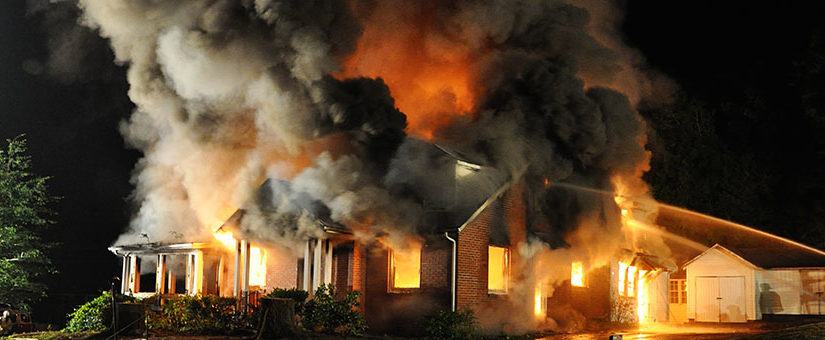
The first step for anyone seeking to offer accommodation under SDA is to contact a Building Certifier to discuss the proposal to determine the relevant Building Classification and what design features are required. It is critical to get this right at the beginning of a development as an incorrect classification can have major implication such as: ineligibility for enrolment as SDA, orders from Local Councils to stop works/vacate the building, infringements notices, demolition and/or retrospective upgrade works, or worst-case detriment on a resident’s health.


Fire Safety

There will be fatalities! It’s not if, but when!

Read our thoughts on the fire safety requirements for Specialist Disability Accommodation on the following page There will be fatalities! It’s not if, but when!

What is Specialist Disability Accommodation SDA


For people in the community with very high support needs, securing suitable housing can be a challenge – but now, Specialist Disability Accommodation or SDA aims to change this. SDA is available to approved participants of the National Disability Insurance Scheme or NDIS who have been assessed as requiring a specialist housing solution to meet their individual needs. NDIS provides financial support to help people with a disability acquire a home that includes the specific design and support features to enable independence, social participation, exercise choice and control in their lives.

All Specialist Disability Accommodation must be designed and maintained to a consistent standard with the surrounding properties and neighbourhood. It must recognise the importance of outdoor areas and be constructed on land of adequate size for the number of residents.

To be eligible for registration as SDA, all properties must meet several minimum requirements as detailed within the NDIS Specialist Disability Accommodation Design Standard. Bruce Bromley from SDA Consulting Australia was a co-author.

The Design Standard sets out the detailed design requirements incorporated into newly built Specialist Disability Accommodation under the National Disability Insurance Scheme.

Based on the four design categories, the SDA Design Standard sets out the minimum design requirements for Improved Liveability, Robust, Fully Accessible and High Physical Support.

By engaging SDA Consulting Australia, part of the Equal Access Group, we can help you navigate these requirements when it comes to being involved with the upgrade or establishment of Specialist Disability Accommodation.


SDA Categories

Specialist Disability Accommodation has been broken up into four separate design categories


Improved Liveability

Under the SDA design categories, “Improved Liveability” housing incorporates a reasonable level of physical access and enhanced provision for people with sensory, intellectual or cognitive impairment.

For example, Improved Liveability dwellings should include one or more additional design features such as luminance contrast, improved wayfinding, and/or lines of sight, depending on the participants’ needs.

Improved Liveability


Fully Accessible

Under the SDA design categories, “Fully Accessible” housing needs to be designed to incorporate a high level of physical access provision for people with significant physical impairment and to include:

  • External doors and external outdoor private areas are to be accessible by wheelchair.
  • Bathroom vanity/hand basin to be accessible in seated or standing position.
  • Power supply to doors and windows (blinds), for retrofit of automation as necessary.
  • Consideration must be given to whether it is appropriate for the kitchen sink, cooktop, meal preparation bench area and key appliances (dishwasher, oven, microwave oven and laundry appliances) to be accessible in a seated or standing position.

Fully Accessible


High Physical Support

Dwellings in the “High Physical Support” SDA design category feature a high level of physical access provision for people with significant physical impairment and requiring very high levels of support and include:

  • External doors and external outdoor private areas are to be accessible by wheelchair.
  • Bathroom vanity/hand basin to be accessible in a seated or standing position.
  • Power supply to doors and windows (blinds), for retrofit of automation as necessary.
  • Consideration shall be given to whether it is appropriate for the kitchen sink, cooktop, meal preparation bench area and key appliances (dishwasher, oven, microwave oven and laundry appliances) to be accessible in a seated or standing position.
  • Structural provision for ceiling hoists.
  • Assistive technology ready.
  • Heating/cooling and household communication technology (e.g. video or intercom systems) appropriate for residents’ needs.
  • Emergency power solutions cater to a minimum two-hour outage where the welfare of participant(s) is at risk.
  • Doors with 950mm minimum clear opening width to all habitable rooms.

High Physical Support


Robust

Under SDA design category requirements, “Robust” housing must be designed to incorporate a high level of physical access provision and be very resilient while reducing the likelihood of reactive maintenance and reducing the participant and the community’s risk.

Robust housing shall be built from resilient but inconspicuous materials that can withstand the heavy use that minimises the risk of injury and neighbourhood disturbance. This includes high-impact wall lining, fittings and fixtures like blinds and door handles; secure windows, doors and external areas; appropriate soundproofing if residents are likely to cause significant noise disturbances and laminated glass.

The layout with areas of leaving or retreat for staff and other residents to avoid harm if required. Consideration must be given to providing adequate space and safeguards throughout the property to accommodate residents’ needs with complex behaviours.

Robust

Newsletter

Keep up with Specialist Disability Accommodation standards using our free e-newsletter. Save yourself the headache of complaints and expensive last-minute upgrades. Sign up here!